Home / Environment / Critically Endangered Lemurs Debut at Central Park Zoo
Critically Endangered Lemurs Debut at Central Park Zoo
2 Aug
Summary
- Black-and-white ruffed lemur twins, Masco and Tonga, are now viewable at Central Park Zoo.
- These lemurs are vital pollinators in Madagascar's rainforests, aiding plant diversity.
- Habitat loss and poaching have drastically reduced wild populations by over 80%.
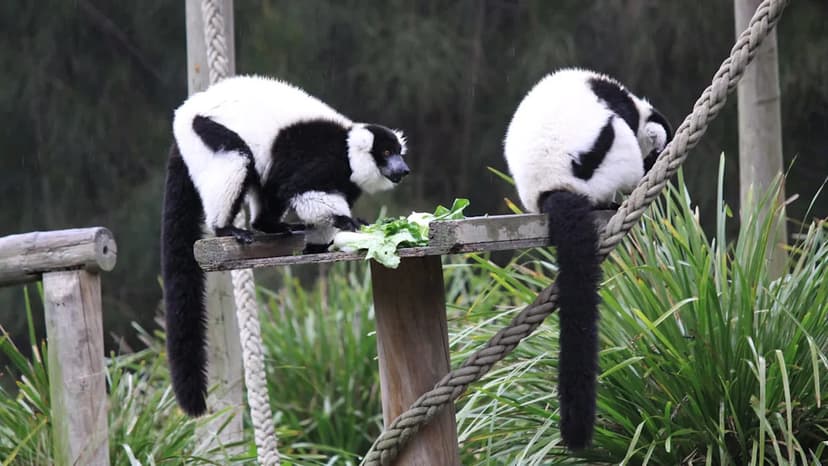
Visitors to New York City's Central Park Zoo can now observe Masco and Tonga, a pair of fraternal black-and-white ruffed lemur twins. This public debut signifies a hopeful development for a species listed as 'critically endangered' by the International Union for Conservation of Nature.
These lemurs hold a significant ecological niche in the eastern Madagascar rainforests. As they feed on nectar, they act as substantial pollinators, contributing to the health of plant life. Their role, along with seed dispersal, earns them the title 'rainforest gardeners.'
Wild populations of black-and-white ruffed lemurs have faced severe decline, with estimates showing a reduction of at least 80% across three generations, primarily due to habitat loss and poaching. The Association of Zoos & Aquariums' Species Survival Plan, which includes programs like those at Central Park Zoo, aims to bolster numbers and preserve genetic diversity.
Conservation initiatives extend beyond zoos, with organizations like the Wildlife Conservation Society supporting protected areas such as Makira Natural Park in Madagascar, a crucial habitat for these lemurs. These efforts are vital for maintaining biodiversity and supporting ecosystems that benefit both nature and local communities.


