Home / Environment / Endangered Apes Compete with Trains in Assam
Endangered Apes Compete with Trains in Assam
24 Dec
Summary
- Western hoolock gibbons, India's only apes, face threats from trains.
- Gibbon populations have plummeted from 100,000 to less than 5,000.
- New tech, including bio-acoustics and thermal drones, aids conservation.
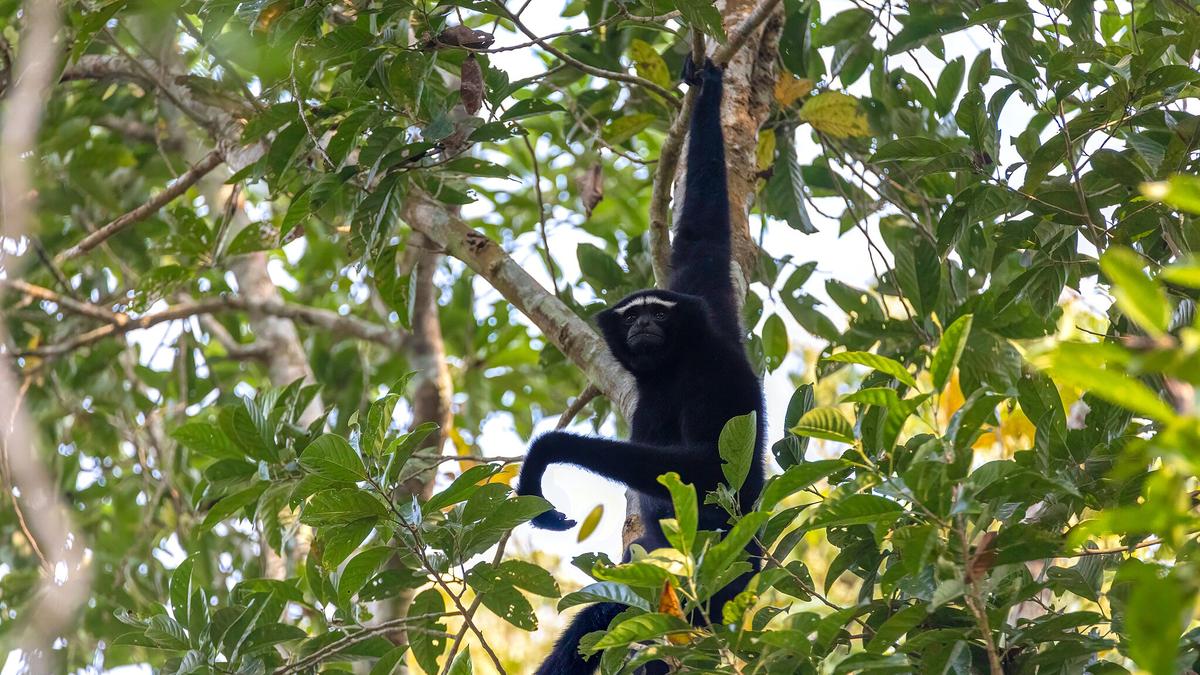
In Assam's Hollongapar Gibbon Sanctuary, the western hoolock gibbon, India's sole ape species, faces a daily struggle against the roar of passing passenger trains. These majestic creatures, whose vocalisations can last up to 30 minutes, must compete for auditory dominance with the British-era Northeast Frontier Railway line that bisects their forest habitat.
The western hoolock gibbon is critically endangered across Northeast India, with populations estimated to have fallen from over 100,000 individuals to fewer than 5,000 in recent decades. This severe decline is attributed to significant anthropogenic pressures, including widespread habitat loss, forest fragmentation, and hunting, compounded by changing land-use patterns.
Conservation organizations are deploying advanced technological solutions to aid gibbon protection, as traditional methods like camera traps are ineffective for arboreal species. Initiatives now involve bio-acoustics, using machine-learning models to identify gibbon calls from forest recordings, and exploring thermal drones equipped with computer vision to detect the primates. Community involvement is also crucial, as local populations manage much of the gibbons' habitat.