

Home / Environment / El Niño Warning: Australia Predicts Drought Return
El Niño Warning: Australia Predicts Drought Return
31 Mar
Summary
- El Niño may emerge by August, ending La Niña.
- Models forecast tropical Pacific warming, El Niño likely.
- Past El Niños caused drought and affected Indian monsoons.
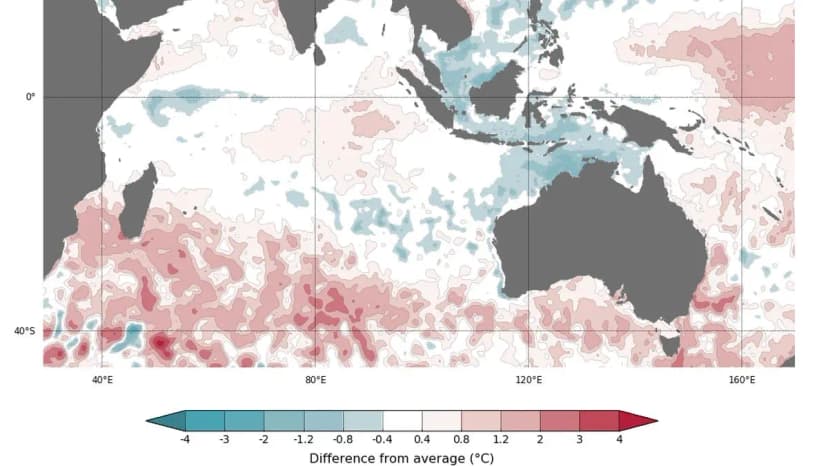
La Niña conditions have officially ended, but the Australian Bureau of Meteorology warns that El Niño may develop towards the end of the Southern Hemisphere winter in August. Current indicators show a neutral state for the El Niño-Southern Oscillation (ENSO), but all models predict continued warming in the tropical Pacific.
Neutral ENSO conditions are expected to persist until at least late autumn (March-May 2026). By August, warming is forecast to reach levels consistent with El Niño. Some models suggest thresholds could be met as early as May, while others anticipate a slower progression.
Historically, El Niño events have led to insufficient monsoon rainfall and extended dry periods. In 2023, an El Niño event persisted for 11 months, significantly impacting India's monsoon and contributing to 2024 being the warmest year on record, affecting crop production and causing food inflation.
Recent data from March 29, 2026, shows sea surface temperatures in the central tropical Pacific within the ENSO-neutral range. A subsurface warming pulse indicates further sea surface temperature increases are probable in the coming weeks. The India Meteorological Department noted weak La Niña conditions, with sea surface temperatures below normal in the equatorial Pacific.
Atmospheric indicators, including trade winds and cloud patterns, currently reflect ENSO-neutral conditions. However, westerly wind anomalies in the central equatorial Pacific are forecast to persist, further enhancing tropical Pacific sea surface temperature warming. The Southern Oscillation Index (SOI) remains positive, above the La Niña threshold.
