

Home / Environment / Beauty and Urgency: Nature's Patterns Under Threat
Beauty and Urgency: Nature's Patterns Under Threat
22 Apr
Summary
- Photographer Jon McCormack documents nature's hidden geometry.
- Climate change accelerates the pace of natural system shifts.
- McCormack's book highlights beauty and urgency of Earth's changes.
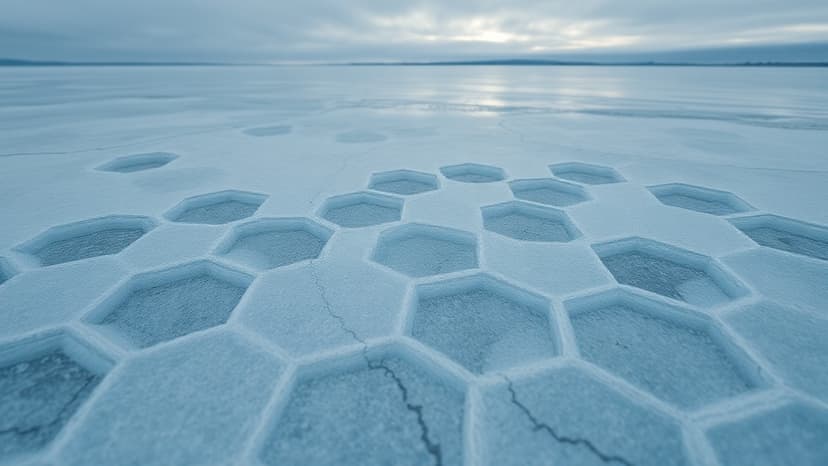
Photographer Jon McCormack has spent years documenting the intricate geometry of Earth's natural systems, from Icelandic ice caves to Kenyan lakes. He observes that these systems are now changing faster than he can capture them, largely due to climate change-fueled extreme weather.
His new book, 'Patterns: Art of the Natural World,' released on Earth Day 2026, aims to convey both the beauty and the pressing urgency of these transformations. McCormack highlights that natural environments are not random but structured and interconnected, reacting significantly when one system shifts.
The past three years, 2024, 2023, and 2025, were the hottest on record globally, exceeding the 1.5°C threshold for the first time over a three-year period. McCormack points out that foundational systems like ice, water, and forests are under immense pressure.
Europe, warming faster than any other continent, faces severe consequences, including the potential near-disappearance of Alpine glaciers by the end of the century and increased forest damage from wildfires and storms. McCormack's work showcases glacial environments, like those in southern Iceland, revealing how quickly ice cave structures form, destabilize, and vanish, with glaciers retreating at an accelerating rate.
McCormack's photographic journey reveals that coastal, lake, and river systems are also exhibiting increased volatility. He notes a loss of long-held environmental rhythms, suggesting that entire systems are being pushed beyond their natural conditions. This volatility is supported by data showing a doubling in the frequency of extreme river flooding in Europe since 1990.
While scientific data provides clarity on climate change impacts, McCormack hopes his photography makes these facts more tangible and felt, fostering a deeper connection and sense of responsibility. His book encourages viewing Earth not as scenery but as a living, intricate system that humanity is part of and must protect. Proceeds from the book will benefit Vital Impacts, supporting conservation storytelling.
