Home / Environment / Earth's Fever Pitch: Civilization in Crisis
Earth's Fever Pitch: Civilization in Crisis
16 Aug
Summary
- July 2026 was the hottest month on record in the Lower 48 states.
- Wildfires now burn twice as much land annually compared to the 1990s.
- Heat waves occur three times more frequently than they did in the 1960s.
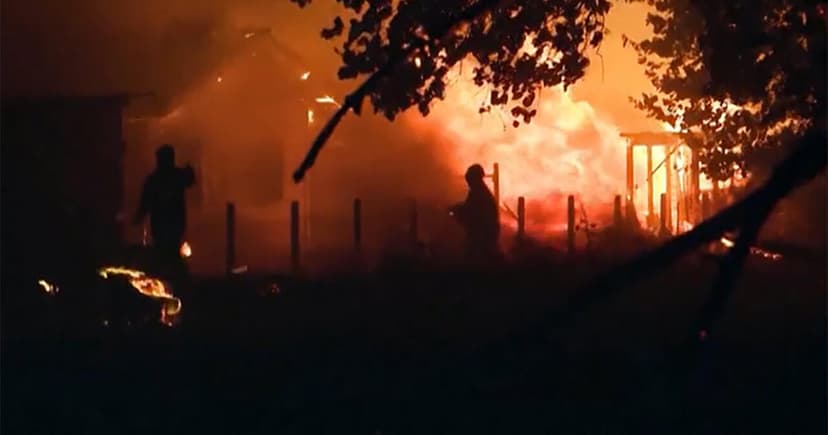
July 2026 marked a grim milestone, becoming the hottest month ever recorded in the contiguous United States. This extreme heat, coupled with prolonged drought and high winds, fueled a destructive wildfire in Spokane, Washington, displacing residents like Ted Chauvin, who lost his home and cherished memories. Washington State experienced its most destructive wildfire season to date, a record underscoring a disturbing trend.
Climate journalist Jeff Goodell notes that this escalation signifies a move towards a hotter, more dangerous planet, with extreme weather events interconnected and indicative of fundamental global change. Heat waves are now three times more common than in the 1960s, and wildfires consume twice as much land annually compared to the 1990s. These shifts are pushing human civilization outside its historical temperature tolerance.
Across the Atlantic, Europe also grappled with deadly fires and record heat, claiming over 10,000 lives where air conditioning is less common. Atmospheric scientist Maria Molina uses AI to model future seasons, emphasizing that while extreme events are natural, their evolution due to a warming background climate is concerning. Adapting to a world fundamentally altered by climate change requires recognizing the problem and developing innovative solutions, as the familiar climate that allowed civilization to thrive is rapidly disappearing.


