Home / Environment / DRC Forests: Plundered or Preserved?
DRC Forests: Plundered or Preserved?
26 Feb
Summary
- DRC's vast forests face threats from logging and carbon-offset programs.
- Local communities fight for control of 11,000 hectares of forest land.
- Forest loss in DRC reached 36% between 2004 and 2022.
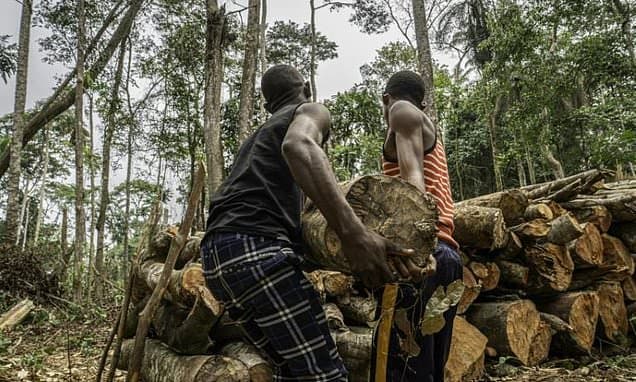
The Democratic Republic of Congo's immense forests, crucial for global climate stability, are increasingly coveted by external interests for logging and carbon-offset schemes. These concessions have led to deadly violence and exploitation.
In response, communities like Yainyongo, which includes Romee village, have fought for and obtained official titles to manage their own forest concessions, totaling 11,000 hectares. This effort aims to protect their ancestral lands from "plundering" by "rich people" who offer little in return.
Despite official recognition of indigenous rights, corruption often undermines these protections, contributing to a staggering 36% loss of DRC's tree cover between 2004 and 2022, according to Global Forest Watch.
While carbon-offset projects promise conservation, many have been criticized for "widespread illegalities" and human rights violations, with a "striking lack of respect" for local consent. Some communities, however, are adopting sustainable farming techniques to improve soil fertility and yields, moving away from destructive shifting cultivation.
Land disputes and overlapping concession claims, often lacking proper titles, frequently erupt into violent conflicts, as seen in a recent bloody conflict between the Mbole and Lengola communities over a logging concession.