Home / Environment / Earth's Most Local Animal Fights for Survival
Earth's Most Local Animal Fights for Survival
24 Jan
Summary
- Entire wild population lives in a single Nevada cavern.
- Seismic activity and water level shifts threaten survival.
- Captive breeding and site protection aid species.
- Last year, 19 captive fish were released to boost population.
- Population dropped from 191 to 38 in one year due to earthquakes.
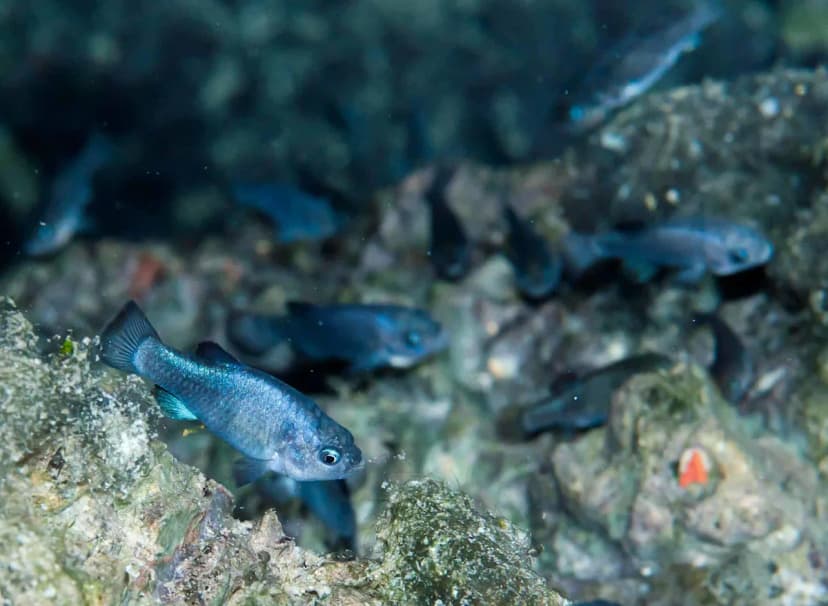
The Devils Hole pupfish (Cyprinodon diabolis), an endangered species, faces precarious survival as its entire wild population is confined to a single limestone cavern in Nevada. This unique fish inhabits a shallow, sunlit shelf spanning only 215 square feet within Devils Hole, its sole habitat.
This extremely limited range makes the pupfish highly susceptible to environmental changes. Threats include seismic activity causing disruptive waves, fluctuations in water levels exposing the vital shelf, and changes in algae growth affecting food availability. For instance, in spring 2025, earthquakes caused waves that displaced food sources and eggs, contributing to a population drop from 191 to 38 fish.
Conservationists employ continuous monitoring and protective measures for Devils Hole. A crucial backup includes a captive breeding program at the Ash Meadows Fish Conservation Facility. In response to the 2025 population crisis, 19 captive-raised pupfish were released into the wild to support the species.
Coordinated efforts with Nevada wildlife managers highlight the multi-level conservation commitment for this state priority species. The pupfish's plight challenges conservation science, emphasizing adaptation and intervention when habitat expansion is impossible and threats are both chronic and sudden.


