

Home / Environment / Delhi Chokes: Pollution Trap Remains Unescapable
Delhi Chokes: Pollution Trap Remains Unescapable
27 Apr
Summary
- Delhi's landlocked geography in the Indo-Gangetic Plain restricts pollutant dispersal.
- Temperature inversion and low winter winds trap pollution, worsening air quality.
- GRAP is reactive, treating symptoms instead of Delhi's baseline pollution problem.
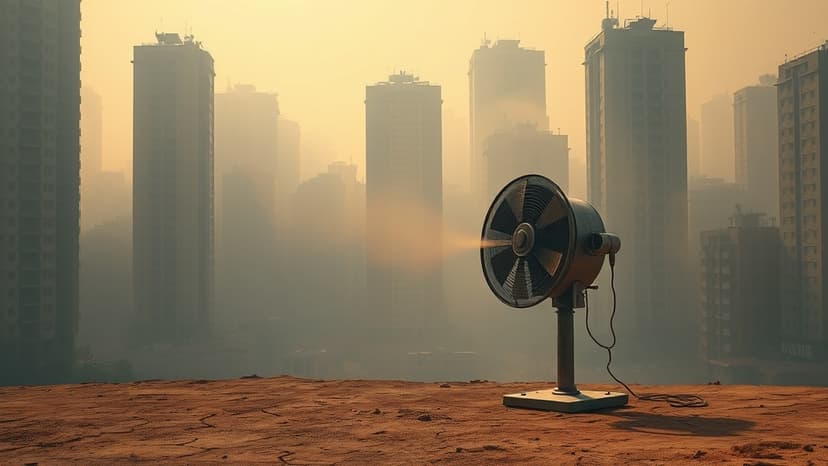
Delhi is grappling with severe air pollution, with AQI levels reaching 'Poor'. The Commission for Air Quality Management has activated Stage-I GRAP due to unfavorable meteorological conditions, highlighting a recurring issue. The city's landlocked geographical position in the Indo-Gangetic Plain, unlike coastal cities, limits natural pollutant dispersal. Winter months, from October to February, are particularly critical due to low wind speeds and temperature inversions, which create a stable atmospheric layer trapping pollutants.
While stubble burning is a significant factor, especially in autumn, Delhi's pollution stems from multiple overlapping sources. These include vehicular emissions, industrial activities, household solid fuel use, waste burning, and construction dust. Secondary particulate matter, which forms in the atmosphere from gases like NOx and SO₂, is a major contributor to the dangerous PM2.5 levels.
The Graded Response Action Plan (GRAP) serves as Delhi's emergency response system, triggering measures based on AQI categories. However, GRAP is criticized for being reactive, addressing the crisis symptoms rather than its root causes. Experts emphasize that the solution lies in reducing baseline emissions year-round through a multi-pronged approach.
This approach includes expanding electric vehicles, strengthening public transport, phasing out older diesel vehicles, and shifting industries to cleaner fuels. Strict enforcement of construction and demolition waste management rules and dust suppression systems are also crucial. Addressing secondary particle formation requires reducing NOx and SO₂ emissions and implementing agricultural reforms. Interstate cooperation among Delhi, Punjab, Haryana, and Uttar Pradesh is vital for a unified airshed approach.
Evidence from COVID-19 lockdowns showed that pollution reduction is possible with emission curtailment, but these were temporary. The stagnation in annual average PM2.5 levels since 2019 indicates current policies are insufficient, necessitating aggressive structural reforms. Delhi's pollution crisis demands a shift from reactive emergency measures to sustained structural reform, requiring political will, scientific planning, and public participation for a lasting solution.
