feedzop-word-mark-logo
searchLogin
Feedzop
homeFor YouIndiaIndia
You
bookmarksYour BookmarkshashtagYour Topics
Trending
trending

Dow Jones awaits Fed decision

trending

ITR refund delays explained

trending

Court reverses Byju order

trending

Australia bans social media under 16

trending

India Post reengineering underway

trending

Union Bank tackles cyber risks

trending

Mexico tariff hits car exports

trending

Sabarimala gold heist case

trending

Ayushman cards issued to women

Terms of UsePrivacy PolicyAboutJobsPartner With Us

© 2025 Advergame Technologies Pvt. Ltd. ("ATPL"). Gamezop ® & Quizzop ® are registered trademarks of ATPL.

Gamezop is a plug-and-play gaming platform that any app or website can integrate to bring casual gaming for its users. Gamezop also operates Quizzop, a quizzing platform, that digital products can add as a trivia section.

Over 5,000 products from more than 70 countries have integrated Gamezop and Quizzop. These include Amazon, Samsung Internet, Snap, Tata Play, AccuWeather, Paytm, Gulf News, and Branch.

Games and trivia increase user engagement significantly within all kinds of apps and websites, besides opening a new stream of advertising revenue. Gamezop and Quizzop take 30 minutes to integrate and can be used for free: both by the products integrating them and end users

Increase ad revenue and engagement on your app / website with games, quizzes, astrology, and cricket content. Visit: business.gamezop.com

Property Code: 5571

Home / Environment / Ocean Floor Biodiversity Collapses After Mining Test

Ocean Floor Biodiversity Collapses After Mining Test

11 Dec

•

Summary

  • Deep sea mining tests reduced macrofauna by 37%.
  • Species richness declined by 32% after test mining.
  • India launched a Rs. 4077 crore Deep Ocean Mission.
Ocean Floor Biodiversity Collapses After Mining Test

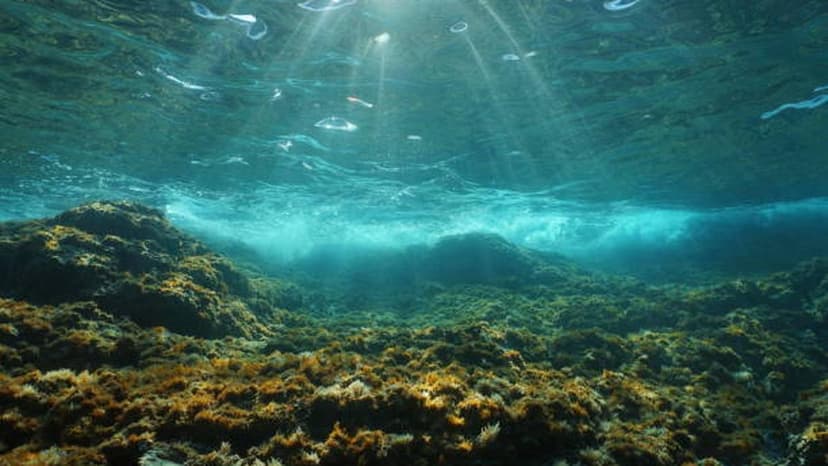
Industrial-scale deep-sea mining operations have been found to severely impact marine ecosystems. A recent large-scale test of commercial deep-sea machinery on the abyssal plain of the eastern Pacific Ocean, at a depth of 4,280 meters, resulted in significant biodiversity loss. Researchers documented a staggering 37% decrease in macrofauna density and a 32% reduction in species richness within the mined areas.

The extensive test, which recovered over 3,000 tonnes of polymetallic nodules, tracked over 80 km of the seafloor in the Clarion-Clipperton Zone, a vast area rich in valuable minerals. The study meticulously cataloged sediment-dwelling macrofauna over two years prior and two months following the mining operation, revealing substantial negative ecological responses.

These findings underscore the urgent need for rigorous assessment of deep-sea mining's ecological footprint. In parallel, India has launched a five-year "Deep Ocean Mission" with an approved budget of Rs. 4077.0 crore, aiming to explore ocean resources and develop related technologies for sustainable use.

Disclaimer: This story has been auto-aggregated and auto-summarised by a computer program. This story has not been edited or created by the Feedzop team.
Deep sea mining in the Clarion-Clipperton Zone has been shown to significantly reduce macrofauna density and species richness.
India's Deep Ocean Mission is a five-year initiative to explore deep-sea resources and develop related technologies.
Macrofauna density decreased by 37% and species richness by 32% in areas affected by the test mining.

Read more news on

Indiaside-arrowEnvironmentside-arrowPacific Oceanside-arrow

You may also like

Hawai'i Fights Rising Tides With New AI Tool

1 day ago • 11 reads

article image

Deep-Sea Monsters: Earth's Own Aliens

5 Dec • 20 reads

article image

Mexico Coast Shaken by 4.7 Magnitude Quake

3 Dec • 47 reads

article image

China Builds Nuclear-Proof Floating Island

21 Nov • 68 reads

article image

Mysterious Golden Orb Found in Deep Sea

20 Nov • 80 reads

article image