Home / Environment / Deep Ocean Farms: Fresh Water's Future Below Waves
Deep Ocean Farms: Fresh Water's Future Below Waves
15 Jan
Summary
- Deep sea desalination aims to cut energy use by 40%.
- New tech tackles brine discharge and marine life harm.
- Cost remains the critical factor for deep sea success.
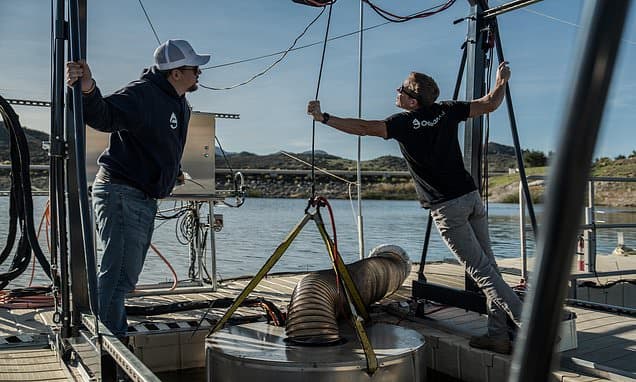
A revolutionary desalination technology is being developed by OceanWell, aiming to solve major environmental challenges associated with producing freshwater from seawater. The company plans to deploy its "Water Farm 1" system 1,300 feet beneath the ocean's surface, leveraging natural pressure to power reverse osmosis. This subsea approach claims to cut energy consumption by approximately 40% compared to conventional onshore plants.
Beyond energy savings, the deep-sea method addresses key environmental concerns. It seeks to minimize the harmful effects of concentrated brine discharge and prevent the intake of marine organisms, such as fish larvae and plankton, that are typically killed in traditional desalination plant intakes. This innovation comes at a critical time as climate change intensifies droughts globally.
While promising, the true test for OceanWell's deep-sea desalination lies in its economic viability. Experts note that the cost of implementing new technologies often exceeds initial projections. Meanwhile, other companies are also exploring subsea desalination, with systems tested in Norway and the Netherlands, indicating a growing trend towards underwater solutions.