feedzop-word-mark-logo
searchLogin
Feedzop
homeFor YouIndiaIndia
You
bookmarksYour BookmarkshashtagYour Topics
Trending
trending

Nolan's 'Odyssey' stuns fans

trending

CAT 2025 result expected soon

trending

Single higher education regulator

trending

South Africa Women win series

trending

PUBG Mobile Esports 2026 Roadmap

trending

Delhi NCR GRAP-IV imposed

trending

Dubai Capitals beat Knight Riders

trending

December meteor shower in India

trending

Dhurandhar enters ₹300 cr club

Terms of UsePrivacy PolicyAboutJobsPartner With Us

© 2025 Advergame Technologies Pvt. Ltd. ("ATPL"). Gamezop ® & Quizzop ® are registered trademarks of ATPL.

Gamezop is a plug-and-play gaming platform that any app or website can integrate to bring casual gaming for its users. Gamezop also operates Quizzop, a quizzing platform, that digital products can add as a trivia section.

Over 5,000 products from more than 70 countries have integrated Gamezop and Quizzop. These include Amazon, Samsung Internet, Snap, Tata Play, AccuWeather, Paytm, Gulf News, and Branch.

Games and trivia increase user engagement significantly within all kinds of apps and websites, besides opening a new stream of advertising revenue. Gamezop and Quizzop take 30 minutes to integrate and can be used for free: both by the products integrating them and end users

Increase ad revenue and engagement on your app / website with games, quizzes, astrology, and cricket content. Visit: business.gamezop.com

Property Code: 5571

Home / Environment / Coral Reefs in Peril as Climate Change Triggers Ecosystem Collapse

Coral Reefs in Peril as Climate Change Triggers Ecosystem Collapse

13 Oct

•

Summary

  • Global warming crossing dangerous thresholds sooner than expected
  • World's coral reefs now in an almost irreversible die-off
  • Amazon rainforest at risk of collapsing beyond 1.5°C warming

Coral Reefs in Peril as Climate Change Triggers Ecosystem Collapse

According to a new report by 160 researchers worldwide, global warming is crossing dangerous thresholds sooner than expected, marking the first "tipping points" in climate-driven ecosystem collapse. The report, titled the "Global Tipping Points," synthesizes groundbreaking science to estimate points of no return for various climate systems.

One of the most alarming findings is the near-irreversible die-off of the world's coral reefs. The last two years were Earth's warmest on record, with marine heatwaves stressing 84% of the world's reefs to the point of bleaching and, in some cases, death. Coral reefs sustain about a quarter of marine life, and scientists say they would need to drastically ramp up climate action to reverse temperatures back down to just 1°C above the preindustrial average for the reefs to recover.

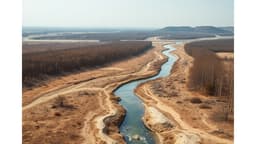
The report also revised down the estimated threshold for the Amazon rainforest, warning that the system is now at risk of collapsing once the average global temperature warms beyond just 1.5°C. This is based on current deforestation rates in the region. The scientists also expressed concern about the potential disruption to the Atlantic Meridional Overturning Circulation, a major ocean current that helps ensure mild winters in northern Europe.

Despite these dire warnings, the report did note some positive signs, such as renewables accounting for more electricity generation than coal for the first time this year. The scientists implored countries at the upcoming COP30 climate summit in Brazil to work toward bringing down climate-warming carbon emissions and prevent further ecosystem collapse.

Disclaimer: This story has been auto-aggregated and auto-summarised by a computer program. This story has not been edited or created by the Feedzop team.
The report identifies the near-irreversible die-off of the world's coral reefs and the risk of the Amazon rainforest collapsing as the first "tipping points" in climate-driven ecosystem collapse.
The report revised down the estimated threshold for the Amazon rainforest, warning that it is now at risk of collapsing once the average global temperature warms beyond just 1.5°C.
The report expressed concern about the potential disruption to the AMOC, a major ocean current that helps ensure mild winters in northern Europe, if temperatures keep rising.

Read more news on

Environmentside-arrowBrazilside-arrowEarthside-arrow

You may also like

Brazil Minister: Climate Inaction Is Buying Time We Don't Have

3 Dec • 61 reads

article image

Filmmaker Laxe on Awards Grind: Lost Items & Amazon Dreams

29 Nov • 62 reads

article image

Brazil Boosts Indigenous Lands, Fights Deforestation

18 Nov • 123 reads

article image

Brazil Wrestles with Balancing Climate and Development Ahead of COP30

17 Nov • 128 reads

Indigenous Protesters Block Entrance to COP30 Summit in Brazil

14 Nov • 154 reads

article image