Home / Environment / Colorado River Crisis: Cuts Loom for Millions
Colorado River Crisis: Cuts Loom for Millions
22 Aug
Summary
- A 10-year blueprint mandates significant water cuts for Western states.
- California, Arizona, and Nevada face up to 40% reduction in water supply.
- Experts call the plan a stopgap, with legal battles looming.
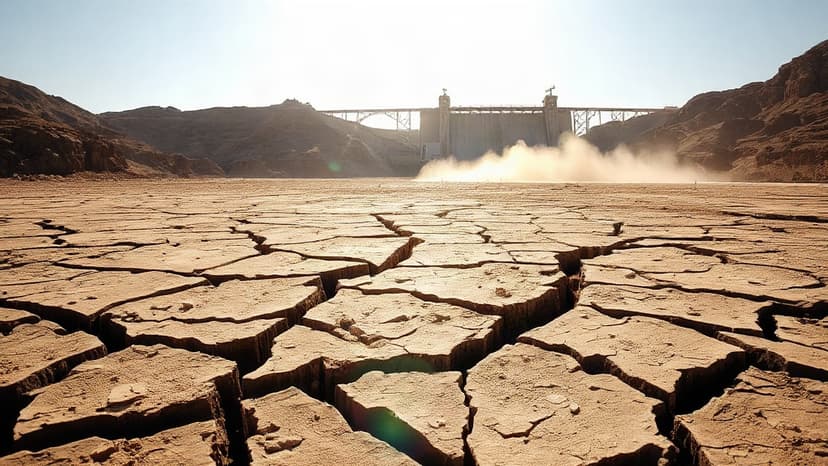
The US Bureau of Reclamation has released a 10-year blueprint to govern the Colorado River, with significant water cuts anticipated for California, Arizona, and Nevada. These states could collectively lose up to 40% of their water supply, approximately 3 million acre-feet annually, under the new federal framework. The plan aims to protect critical infrastructure while allowing more time for the seven basin states to negotiate an agreement on managing the dwindling resource.
This federal blueprint is viewed by experts as a temporary measure rather than a definitive solution to the escalating water crisis in the American West. Mandatory cuts of 1.25 million acre-feet are planned for the lower-basin states in 2027 and 2028, with the possibility of larger reductions based on future conditions. The Colorado River's flows have averaged just over 10 million acre-feet annually since 2020, a stark contrast to the 1922 compact that allocated 7.5 million acre-feet to both upper and lower basins.
Tensions remain high as upper-basin states (Colorado, New Mexico, Utah, Wyoming) and lower-basin states (California, Arizona, Nevada) have failed to reach a consensus for years. Concerns persist that the proposed cuts may not be sufficient to restore balance, with Lake Powell and Lake Mead reaching record low levels. The river's ecosystems and agricultural sector, which uses over 70% of its water, are already facing severe impacts.
While the federal government operates key reservoirs like Lake Powell and Lake Mead, giving it leverage over the lower basin, it lacks direct authority over state water policies. The plan includes incentives for conservation in upper-basin states, encouraging up to 200,000 acre-feet of water savings. However, state representatives argue that the responsibility for reductions must be shared equitably across all seven states, and sharp divisions and the threat of protracted legal battles loom.


