Home / Environment / China's Ozone Pollution: Trend Slows, But Concerns Remain
China's Ozone Pollution: Trend Slows, But Concerns Remain
9 Sep
Summary
- China's ozone pollution shows a slowing trend during the 14th Five-Year Plan.
- Ozone remains a primary pollutant, particularly in major economic clusters.
- Other air pollutants have seen consistent downward trends since 2016.
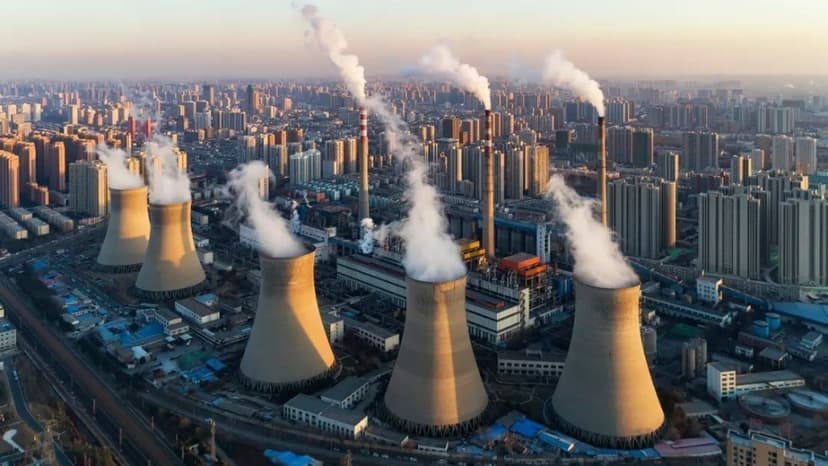
Ozone pollution in China, previously on a distinct upward trajectory, has begun to show a slowing trend since the commencement of the 14th Five-Year Plan period (2021-25). Despite some key regions experiencing reduced ozone levels, the national picture still presents concerns, as significant improvements have not yet been definitively achieved.
Data indicates that between 2016 and 2020, average annual ozone concentrations in 339 major Chinese cities rose considerably, peaking in 2019. While there was a slight decrease in 2020, the overall trend remained upward. Since 2021, national average ozone concentrations have fluctuated without a clear direction.
Ozone has become a leading pollutant impacting urban air quality across China, with its role as the primary pollutant becoming increasingly pronounced. In 2025, ozone was the main pollutant on nearly half of the days with air quality exceeding national standards. This proportion is even higher in major economic clusters like the Beijing-Tianjin-Hebei region, the Yangtze River Delta, and the Pearl River Delta. In stark contrast, other air pollutants have maintained a sustained downward trend over the same period.


