feedzop-word-mark-logo
searchLogin
Feedzop
homeFor YouIndiaIndia
You
bookmarksYour BookmarkshashtagYour Topics
Trending
Terms of UsePrivacy PolicyAboutJobsPartner With Us

© 2026 Advergame Technologies Pvt. Ltd. ("ATPL"). Gamezop ® & Quizzop ® are registered trademarks of ATPL.

Gamezop is a plug-and-play gaming platform that any app or website can integrate to bring casual gaming for its users. Gamezop also operates Quizzop, a quizzing platform, that digital products can add as a trivia section.

Over 5,000 products from more than 70 countries have integrated Gamezop and Quizzop. These include Amazon, Samsung Internet, Snap, Tata Play, AccuWeather, Paytm, Gulf News, and Branch.

Games and trivia increase user engagement significantly within all kinds of apps and websites, besides opening a new stream of advertising revenue. Gamezop and Quizzop take 30 minutes to integrate and can be used for free: both by the products integrating them and end users

Increase ad revenue and engagement on your app / website with games, quizzes, astrology, and cricket content. Visit: business.gamezop.com

Property Code: 5571

Home / Environment / Chile's Noah's Ark: Seeds Saved from Extinction

Chile's Noah's Ark: Seeds Saved from Extinction

1 Feb

•

Summary

  • Chile preserves its unique flora in a remote Atacama Desert seed bank.
  • The Initihuasi seed bank safeguards genetic material against catastrophes.
  • This initiative aims to adapt Chilean agriculture to climate change impacts.
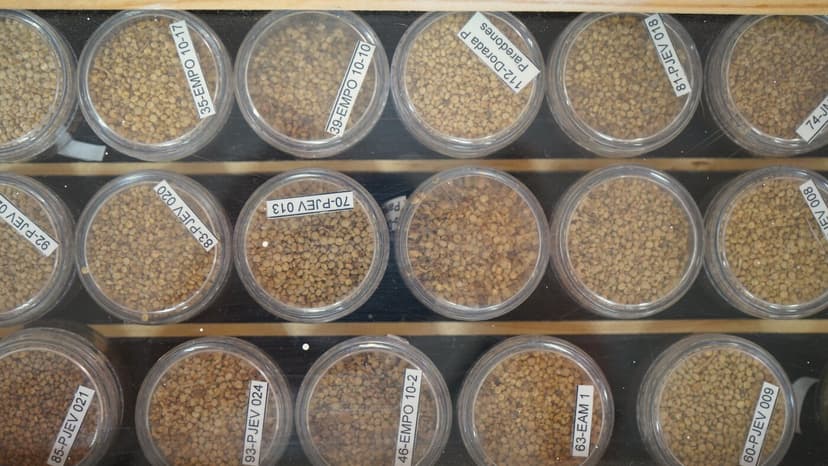
Chile's Noah's Ark: Seeds Saved from Extinction

Nestled in Chile's Atacama Desert, the Initihuasi seed bank operates as a crucial safeguard for the nation's botanical heritage. Located remotely to protect against potential catastrophes, this facility meticulously preserves Chilean flora.

The seed bank maintains seeds in a walk-in freezer at -4 degrees Fahrenheit and 15% humidity, using earthquake-proof storage. It houses specimens, including species once thought extinct, contributing significantly to Chile's rich biodiversity, of which 46% is endemic.

This national network of seed banks, with Initihuasi as its hub, is preparing for future challenges, particularly climate change. The stored genetic material is intended to enable adaptation of Chilean agriculture to altered environmental conditions predicted in the coming decades.

Some of Chile's seed collections have been shared globally, with duplicates sent to Colombia and the Svalbard Global Seed Vault. This initiative underscores Chile's commitment to conservation and its role in securing agricultural resilience.

Disclaimer: This story has been auto-aggregated and auto-summarised by a computer program. This story has not been edited or created by the Feedzop team.
The Initihuasi seed bank is a research facility in Chile's Atacama Desert dedicated to preserving the country's unique flora and genetic material for its agriculture.
The seed bank is situated remotely to protect the stored genetic material from potential catastrophes such as wars and to safeguard Chile's biodiversity.
Chile is preparing for climate change by utilizing the genetic material stored in its seed banks to adapt its agriculture to predicted future environmental conditions.

Read more news on

Environmentside-arrowChileside-arrow
trending

Chelsea beats West Ham 3-2

trending

Liverpool, Newcastle face injury woes

trending

WWE Royal Rumble in Riyadh

trending

Barcelona faces Elche in LaLiga

trending

Goretzka staying at Bayern Munich

trending

ICC T20 World Cup squads

trending

Gold, silver ETFs crashed

trending

Curran, Pandya T20Is stats compared

trending

Suryakumar Yadav T20I record

You may also like

Tiny Hummingbird's Last Stand in Andes

23 Jan • 43 reads

article image

Queen's Interdisciplinary Research: Solving Global Crises

19 Jan • 52 reads

article image

Scotland Nature Reserve Shuts Doors Until Spring

16 Dec, 2025 • 187 reads

article image

Rare Seven-Arm Octopus Stuns Aberdeenshire Coast

3 Dec, 2025 • 265 reads

article image

Darwin Gas Plant: Toxic Releases Underestimated 13,000%

29 Nov, 2025 • 278 reads

article image