

Home / Environment / NGT Flags Alarming Pollution in City Drains
NGT Flags Alarming Pollution in City Drains
22 Apr
Summary
- Faecal coliform, total coliform, and BOD levels are alarmingly high.
- Amicus curiae notes sewage still enters stormwater drains.
- Waste management affidavit contains inconsistencies and data gaps.
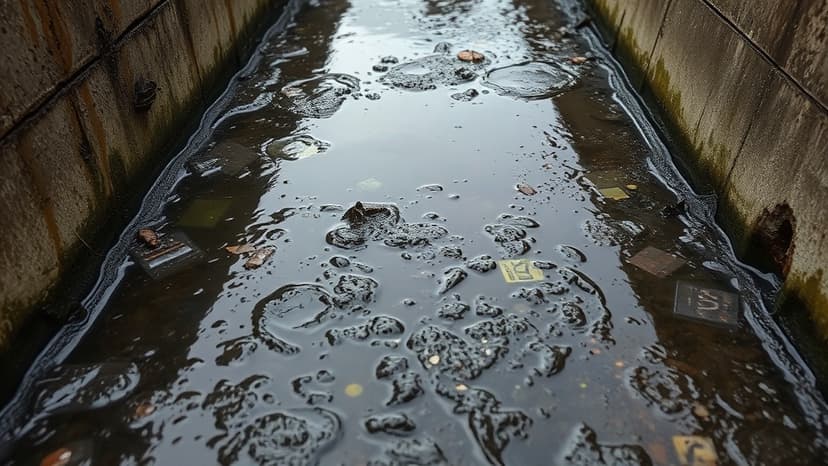
The amicus curiae for the National Green Tribunal (NGT) has reported "alarmingly high levels" of faecal coliform, total coliform, and biochemical oxygen demand (BOD) in Chandigarh's primary stormwater drains. These findings contradict the UT administration's claims of successfully intercepting all wastewater discharge points.
Despite assurances, sewage continues to enter the drains, with Faidan Choe openly identified as a source flowing into the Ghaggar river. The amicus also criticized the UT's waste management affidavit, citing significant inconsistencies, data gaps, and lack of clarity in waste accounting and treatment.
Concerns extend to sewage treatment capacity, as the Raipur Kalan STP operates beyond its limits, and the Diggian STP awaits operational approval without clear explanation. Solid waste processing also shows discrepancies, with substantial amounts of biodegradable waste and RDF unaccounted for.
Testing revealed heavy metals like chromium, cadmium, lead, and nickel in compost, raising fears of long-term contamination. The landfill site's handling of multiple waste streams, including RDF residue and heavy metal-laden compost inert, poses cumulative environmental and health risks. The bioremediation of legacy waste is slated for completion by April 2026.
The UT established a ring-fenced account for environmental compensation on November 4, 2024, with Rs 202.8 crore spent, but a detailed expenditure breakdown is missing.
