Home / Environment / Hope Roars: Tiger Reintroduction Begins in Kazakhstan
Hope Roars: Tiger Reintroduction Begins in Kazakhstan
11 Aug
Summary
- Kazakhstan reintroduced the Caspian tiger, absent for over 70 years.
- A wild-caught female tiger named Umit was released into a nature reserve.
- Plans aim to establish a self-sustaining population of around 50 tigers.
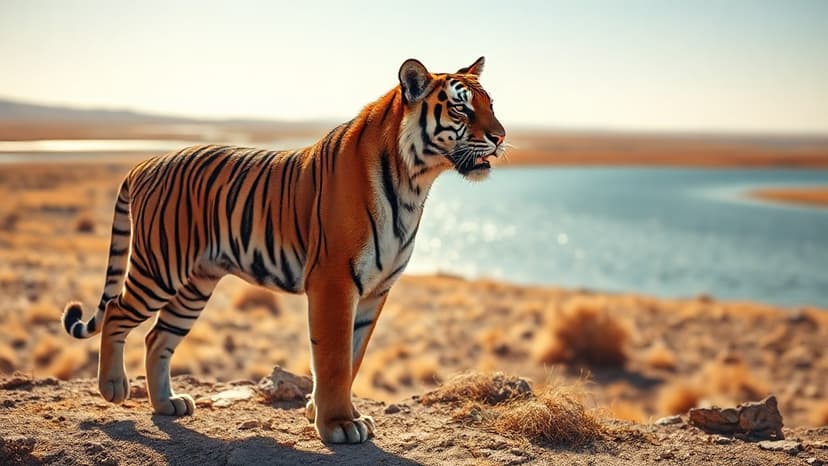
Kazakhstan has initiated a groundbreaking conservation effort by releasing a Caspian tiger into a nature reserve, marking the species' return after a 70-year absence. The released female tiger, named Umit, was transported from the Russian far east to the Lake Balkhash region on July 31, 2026. This event positions Kazakhstan as the first country to restore a tiger range previously considered extinct.
The ambitious project, spearheaded by Kazakhstan's environment minister, aims to re-establish a self-sustaining population of around 50 Caspian tigers. Future releases will include more big cats, with plans to introduce a wild-caught male currently under observation and two young cubs being raised with minimal human contact. These tigers will be released into marshlands rich with prey like boar and deer.
The Caspian tiger, once widespread across Central Asia, was declared extinct in the 1970s due to hunting and habitat loss. A scientific breakthrough in 2009 revealed the genetic similarity between Caspian and Amur tigers, paving the way for this reintroduction. Feasibility studies identified Kazakhstan's Ile-Balkhash area as a prime location with suitable habitat for the tigers' return.
This cross-border translocation effort draws inspiration from successful Amur tiger reintroduction projects in the Russian far east. Despite global declines in wild tiger populations, Kazakhstan's initiative offers hope. Ensuring sufficient prey, such as wild boar and deer, remains crucial for the long-term survival and success of the reintroduced tigers.


