Home / Environment / California's Mega Wildlife Crossing Faces Delays
California's Mega Wildlife Crossing Faces Delays
19 Mar
Summary
- The world's largest wildlife crossing is over budget at $114 million.
- Construction delays are attributed to wildfires, tariffs, and heavy rain.
- Completion is now expected in Fall 2026, nine months behind schedule.
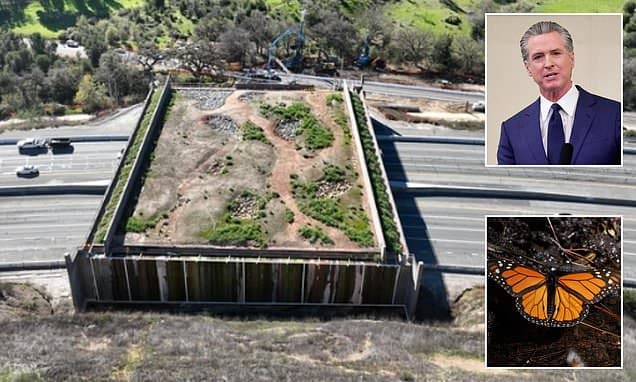
California's Wallis Annenberg Wildlife Crossing, intended to be the world's largest wildlife overpass, is experiencing substantial delays and cost increases. Governor Gavin Newsom announced the project in 2022, with the initial $93 million budget now escalating to $114 million. The overpass, designed to span the 10-lane US 101 highway, aims to improve safety for both wildlife and drivers.
Construction, which began last summer, has been hampered by various issues including wildfires impacting equipment costs, tariffs, and record rainfall in 2022 and 2023. Aerial views show the main structure is complete, but it remains inaccessible as it doesn't yet connect to the ground. The project was originally slated to open by the end of 2025 but is now predicted to be finished by Fall 2026.
The crossing will reconnect protected lands in the Santa Monica Mountains and Sierra Madre Range. State funding accounts for approximately $77 million of the construction costs, with the remainder coming from private donors. Despite having sufficient funds for construction, an associated organization is seeking an additional $6 million to maintain the habitat.
Governor Newsom has called the project 'ambitious,' highlighting its role in bridging conservation and urban development, ensuring 'people and animals can thrive together.' The crossing is designed to accommodate a wide range of animals, from butterflies to bears, while ensuring minimal disruption to transportation.