Home / Environment / Brazil's Sertão Turns Arid: A Climate Crisis Unfolds
Brazil's Sertão Turns Arid: A Climate Crisis Unfolds
29 Dec, 2025
Summary
- Brazil's first arid zone, 5,700 sq km, emerged in the northeast.
- Droughts threaten livelihoods, forcing goat herders to buy feed.
- Climate change has caused an irreversible shift in the region.
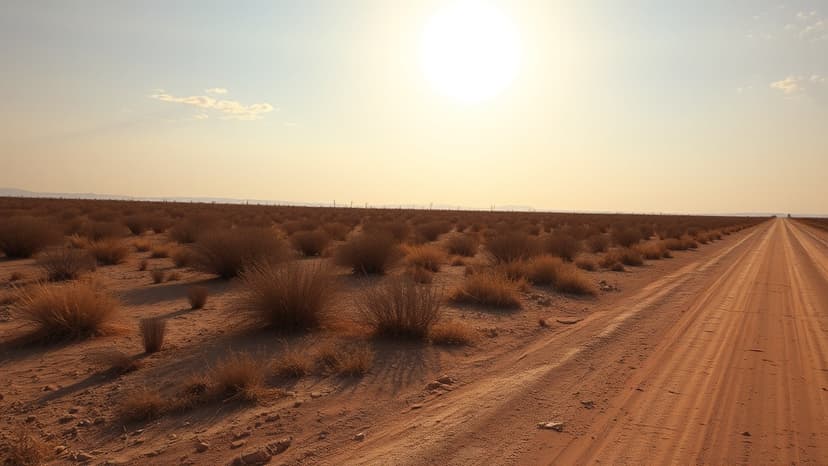
Macururé, a town in Brazil's Bahia state, is experiencing a stark climate reality as a 5,700 sq km area in the semi-arid northeast has been classified as arid. This marks Brazil's first such zone, characterized by sustained higher temperatures and reduced rainfall, a shift occurring within just one generation. The consequences are profound for local communities whose primary income often relies on goat herding.
Residents like Raildon Suplício Maia report difficulties in finding food and water for their animals, forcing them to spend earnings on costly feed. The once-reliable rainy season is now unpredictable, impacting subsistence farming. This climate change, linked to global warming and greenhouse gas emissions, accelerates desertification, threatening the Caatinga biome and threatening the region's fragile ecosystem.
While engineered solutions like water cisterns and trenches exist, they are increasingly strained by the prolonged dry seasons. The aridification of the sertão serves as a critical warning for the entire country, highlighting the urgent need for climate mitigation and policies to combat desertification. Addressing this irreversible change requires national attention and support for regions like Macururé.