Home / Environment / Bengaluru's Streets Explode in Pink This Spring
Bengaluru's Streets Explode in Pink This Spring
4 Mar
Summary
- Tabebuia trees, native to Central America, bloom pink in Bengaluru.
- The trees were introduced during British colonial rule and expanded by Mysore king.
- Spring bloom season typically peaks in mid-March, transforming the city.
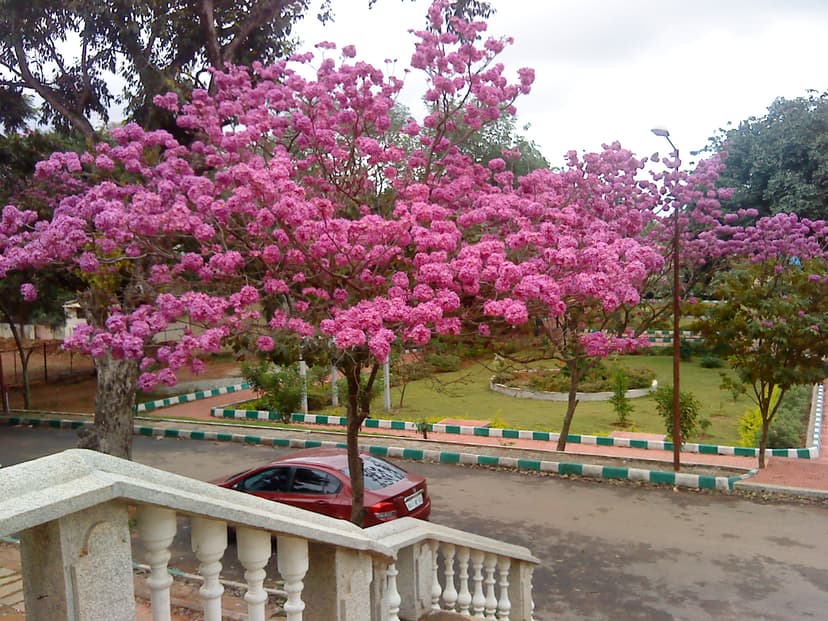
Each spring, Bengaluru is transformed by the vibrant pink blooms of Tabebuia trees, a spectacle that occurs between late February and mid-March. These trees, scientifically known as Tabebuia rosea, are native to Central and South America and were introduced to the city during the late 19th century under British colonial rule. The Mysore king of that era took a keen interest, leading to extensive plantings in Lalbagh Garden and city avenues, with horticulturists like John Cameron and Gustav Hermann Krumbiegel overseeing the project.
Later, in 1980, horticulturist S.G. Neginhal formalized and scaled up the planting of Tabebuia avellanedae as avenue trees, solidifying Bengaluru's reputation as a pink paradise. The peak bloom, often occurring in mid-March, is characterized by trees shedding their leaves entirely to showcase dense canopies of soft rose-colored flowers. This annual event creates a temporary, yet profound, transformation, reminding residents of the city's natural beauty amidst rapid development.
Residents and visitors can witness this phenomenon in various locations, including Cubbon Park, Lalbagh Botanical Garden, and tree-lined streets in neighborhoods like Malleshwaram, Jayanagar, and Basavanagudi. The timing can shift slightly based on weather patterns, with mid-March generally being the safest bet for peak bloom. A crowd-sourced bloom tracker at blrbloom.com helps people monitor the progress across the city in real time.