Home / Environment / Bell's AI project expansion faces environmental assessment
Bell's AI project expansion faces environmental assessment
24 Nov
Summary
- Bell Canada's AI data centre project initially bypassed environmental review.
- Expansion of the AI data centre will now undergo a full environmental assessment.
- Saskatchewan's assessment act requires review based on specific development criteria.
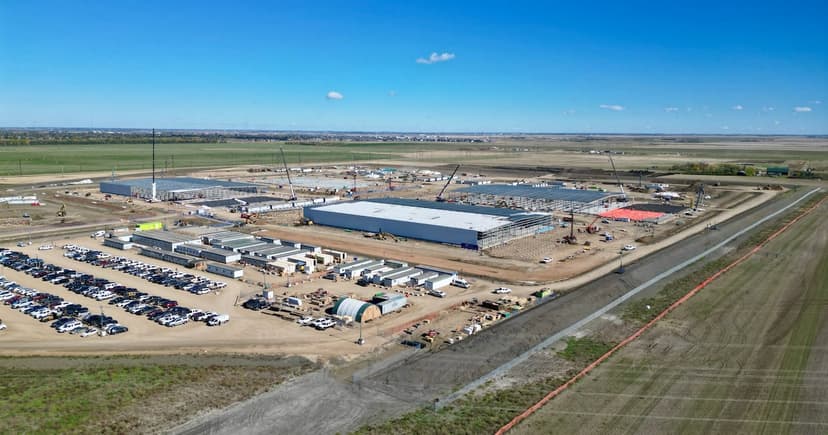
Bell Canada's significant AI data centre project in Saskatchewan, valued at $52 billion, is facing increased scrutiny. While the initial phase of the Sherwood AI Data Centre project did not require an environmental assessment, as environmental factors were covered by existing permits, expansion plans have changed this. The project's required power generation has quadrupled, increasing from 300 MW to 1.2 GW. This substantial scale-up, coupled with new provincial policy requiring data centres to supply their own power, means 900 MW will be generated by Bell Canada. This expansion will now undergo Saskatchewan's provincial environmental impact assessment, including a public review. Officials noted that dedicated power generation for such projects would typically mandate an assessment under the province's Environmental Assessment Act. The Act defines a 'development' based on six criteria, and widespread environmental changes, not general public concern, are necessary to trigger a mandatory review. For example, a recent Cargill canola crush facility near Regina also did not require an assessment but was subject to all environmental regulatory requirements.
As of November 17, 2026, provincial authorities confirmed that the expansion of Bell Canada's AI data centre will face a full environmental impact assessment and public review. This follows a period where the first phase of the project operated under existing permits and regulations. Bell Canada stated its commitment to responsible development and community partnership. Three other projects in Saskatchewan—a proposed uranium mine near Patterson Lake, a solar farm near Weyburn, and a wind farm near Assiniboia—received environmental impact assessments and were approved by the ministry in 2026. Other projects listed on the Ministry of Environment's website were either deemed not to be 'developments,' were self-declared, or were production increases and expansions of existing projects approved by the ministry.


