Home / Environment / Avalanche Triggers: The Science Behind Deadly Snow Slides
Avalanche Triggers: The Science Behind Deadly Snow Slides
12 Mar
Summary
- Avalanches form with a weak layer under a strong layer, requiring a trigger.
- Snowpack layers constantly change, creating unpredictable avalanche conditions.
- Climate change may increase avalanche risk by altering snowpack stability.
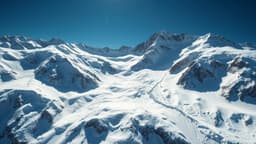
Avalanches, deadly masses of snow moving at speed, are triggered by specific conditions. Experts note that a strong snow layer resting on a weak layer, combined with a trigger like stress, initiates these slides. The snowpack is not static; its crystalline structure constantly changes, sometimes creating weaker layers that increase avalanche risk. Scientists emphasize that each precipitation or temperature event transforms snow layers, potentially leading to more avalanche-prone conditions.
Predicting the exact timing of avalanches remains difficult due to the unique nature of each snowpack. Even small distances can reveal significant differences in snow profiles. Forecasting involves a blend of scientific data and interpretive experience, considering how upcoming weather patterns might interact with existing snow structures. Ensuring cohesion within a snow slab is vital for triggering a fracture that propagates widely.
While the precise link between climate change and avalanche frequency is complex, experts suggest a growing influence. Increased global temperatures generally lead to decreased snow amounts at lower elevations, but higher elevations might receive more snow. Erratic weather patterns associated with climate change can create less stable snowpack layers. Ultimately, avalanche safety relies on understanding these natural phenomena and taking essential precautions before engaging in backcountry recreation.