Home / Environment / Tahoe Snowpack a Ticking Time Bomb
Tahoe Snowpack a Ticking Time Bomb
19 Feb
Summary
- A snow drought transformed fragile crystals into weak layers.
- Freezing rain on February 10th added critical weight.
- High winds and heavy snow created dangerous avalanche conditions.
The conditions leading to a recent avalanche were established weeks prior. A period of drought in California, influenced by the same weather pattern chilling the Eastern U.S., prevented significant snow accumulation after an initially snowy December and January. During this dry spell, fluctuating temperatures caused water vapor to form fragile 'facets' within the snowpack, resembling a precarious domino structure.
On February 10th, this fragile layer was compromised further when fresh snow arrived, followed by freezing rain in some areas. This ice added significant weight to the weak, buried crystals. Avalanche experts, surveying the area near the slide site, identified these dangerous layers and even triggered controlled avalanches to test the snowpack's stability.
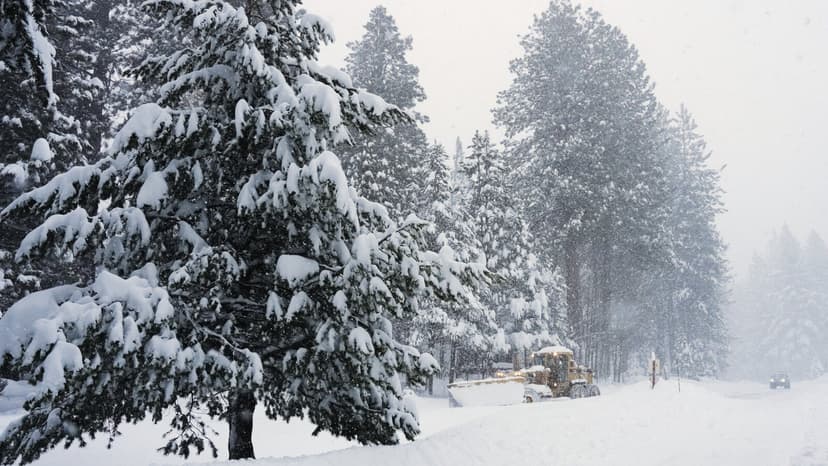
Forecasters from the Weather Prediction Center and the National Weather Service issued numerous warnings. They predicted heavy snowfall, with rates exceeding three inches per hour in the Sierra Nevada, and wind gusts over 100 miles per hour. By early Tuesday, nearly three feet of snow had accumulated at Donner Peak over 48 hours, with 27 inches falling in just 24 hours.
These elements combined to create a perilous situation. A heavy slab of new snow piled atop the weak layers, making the entire region susceptible to slides. Officials from the Sierra Avalanche Center issued a Backcountry Avalanche Watch for the Greater Tahoe region, warning that large avalanches could be easily triggered by skiers, snowboarders, or other disturbances.