Home / Environment / Earth's Mars? Atacama's extreme dryness shocks
Earth's Mars? Atacama's extreme dryness shocks
17 Jan
Summary
- Atacama Desert in Chile is Earth's driest non-polar region.
- Some areas received no rain for over 400 years.
- Microorganisms survive dormant for decades, awaiting moisture.

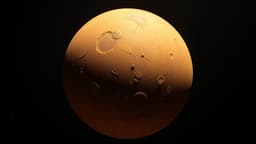
The Atacama Desert in Chile, spanning 4,800 square kilometers, is renowned as Earth's driest non-polar region, featuring a landscape strikingly similar to Mars. Certain areas within the desert have experienced over 400 years without any rainfall, with other regions receiving minimal precipitation annually.
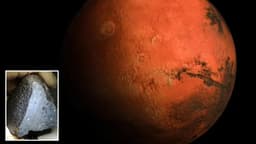
NASA scientists study the Atacama's extreme conditions, particularly its arid core, to draw parallels with Mars and assess the possibility of extraterrestrial life. The soils there are described as the most lifeless and Mars-like on Earth, though some coastal succulents and dormant microorganisms capable of surviving for decades have been identified.
Despite its extreme aridity, the Atacama Desert is also a tourist destination, offering unique landscapes and experiences. Visitors can explore geyser fields, salt flats, and volcanic peaks, with San Pedro de Atacama serving as a green oasis amidst the stark beauty.