Home / Environment / Fast-Track Breeding Offers Hope for Britain's Ash Trees
Fast-Track Breeding Offers Hope for Britain's Ash Trees
22 Apr
Summary
- A new rapid breeding method speeds up ash tree seed germination significantly.
- This innovation offers a potential solution to the devastating ash dieback epidemic.
- The technique could be adapted for home use, aiding tree conservation efforts.
An epidemic affecting ecologically vital ash trees across Europe, particularly in Britain, may be nearing its end due to a scientific advancement. Ash dieback, a fungal disease that obstructs water transport within trees, was first identified in Britain in 2012 and is estimated to wipe out up to 80 percent of the nation's ash trees.
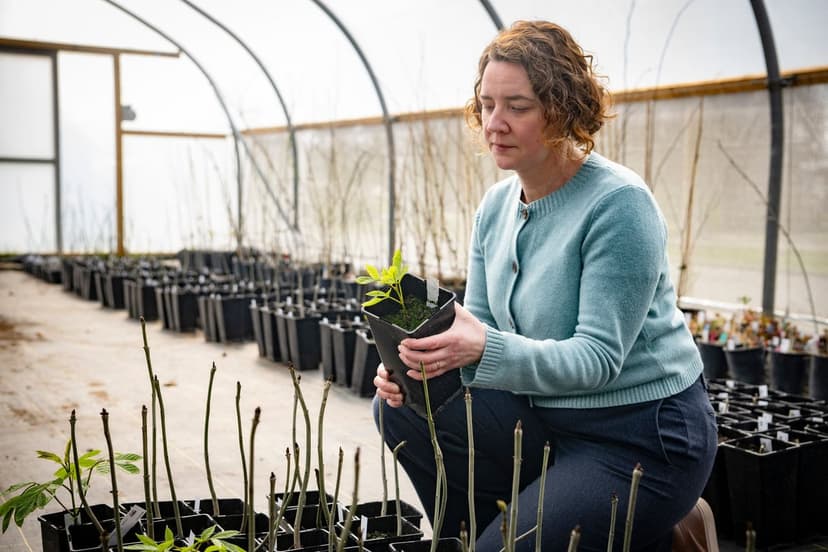
Researchers at the John Innes Centre in Norwich have pioneered a rapid seed germination method. This process, which naturally takes up to six years, can now be completed in about a week in a laboratory. This accelerated technique has already produced over 2,000 seedlings for ongoing trials and research, marking a significant step in combating the disease.
The breakthrough, published in the Scandinavian Journal of Forest Research, involves carefully extracting ash tree embryos and placing them on an agar nutrient jelly. This bypasses the seed's natural dormancy period, which requires specific warm and cold conditions. Within approximately two weeks, seedlings are ready for transplanting to compost, and after ten months in a glasshouse, they can be planted outdoors.
This innovative method has garnered international acclaim and holds the potential for adaptation by landowners, conservation volunteers, and amateur gardeners. Dr. Elizabeth Orton, a lead researcher, noted that a 'kitchen method' is being developed for home use, potentially using readily available substances like household bleach and agar. This advancement is crucial in the race to protect keystone species like ash, especially in the context of climate change exacerbating the spread of pests and pathogens.


