Home / Environment / Eco-Restoration: The High-Value Solution for Aravallis
Eco-Restoration: The High-Value Solution for Aravallis
4 Feb
Summary
- Restoration offers significant economic value, potentially yielding 10x investment.
- Aravalli Green Wall Project aims to create a buffer from Gujarat to Haryana.
- Court stays Aravalli definition, prompting focus on eco-restoration.
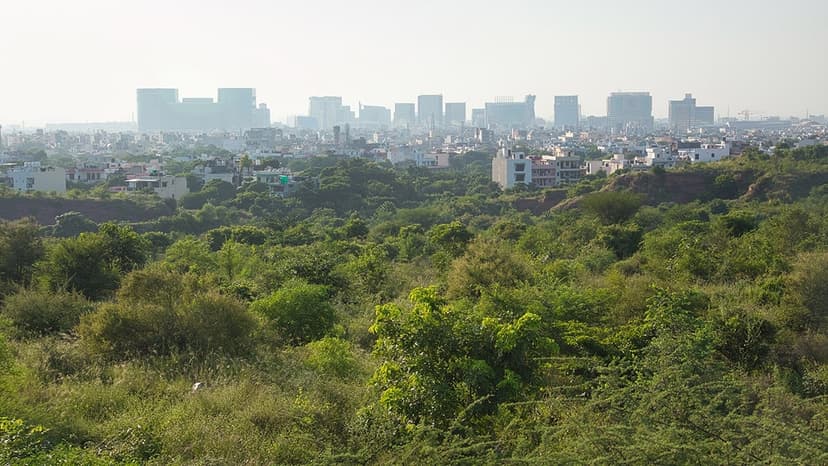
A report released last month by the Sankala Foundation, in partnership with the Haryana government, advocates for the eco-restoration of the Aravalli range. This ecological imperative is also presented as economically prudent, with global assessments showing restoration can yield benefits up to ten times the investment, while inaction could cost more than three times as much.
The report emphasizes that widespread deforestation, mining, and urbanization have degraded the Aravallis, weakening its natural barrier function and accelerating desertification. In response, the central government announced the Aravalli Green Wall Project in 2023, an initiative aimed at creating a five-km-wide green buffer from Porbandar, Gujarat, to Panipat, Haryana.
This project, inaugurated on June 5 last year, involves afforestation with native species, reforestation, and water body rejuvenation. The Sankala report strongly supports this initiative but stresses the need for a connected ecological system approach, warning that fragmented interventions could hinder success.
Meanwhile, the Supreme Court has stayed a new definition of the Aravallis, prompting environmentalists to focus on restoration. This situation has led to a debate where 'restoration' is seen as a profitable 'cure' strategy, with concerns raised that this approach prioritizes immediate economic gains over preventative measures. Experts also caution that geological formations, not just hill features, define the Aravallis, and that mining could cause irreparable ecological damage.