Home / Environment / Giant Ships Plunder Antarctic Krill: Food Chain at Risk
Giant Ships Plunder Antarctic Krill: Food Chain at Risk
24 Mar
Summary
- Industrial krill fishing endangers the Antarctic food chain.
- Krill are vital for penguins, seals, whales, and carbon storage.
- Environmental groups document destructive fishing practices.
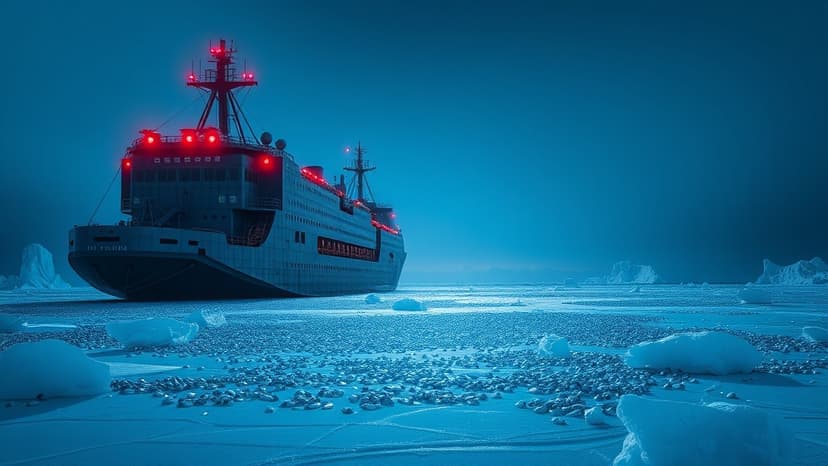
Industrial krill fishing in the Antarctic, though regulated, is significantly impacting the marine food chain. Environmental group Sea Shepherd is documenting operations off Coronation Island, where massive ships compete to catch krill before an annual quota is reached. This practice poses a severe threat to the delicate Antarctic ecosystem, as krill are the primary food source for whales, seals, and penguins.
Beyond its role in the food web, krill are essential for carbon storage, and their diminished numbers could lead to increased atmospheric carbon dioxide. Scientific studies suggest that current krill populations may be insufficient to support existing whale populations alongside commercial fishing. The trade, valued at over $450 million annually, supplies health food capsules and fishmeal for farmed salmon.
Sea Shepherd aims to draw global attention to this issue, with plans for scientific research to further assess the ecological impacts. Despite CCAMLR's assertions of no specific threat, activists argue that the industry's expansion outpaces the ability to gather data, risking irreversible damage to this pristine environment. The organization's campaign seeks to halt all krill fishing in the region.