Home / Environment / Andhra Tigers Get New Genes from Two States
Andhra Tigers Get New Genes from Two States
30 Jul
Summary
- Two female tigers will be translocated to Andhra Pradesh.
- Anti-poaching camps in NSTR are increasing from 89 to 150.
- NSTR is India's largest tiger reserve, spanning 5,443 sq km.
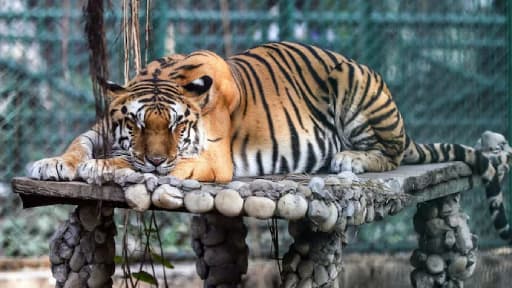
The genetic diversity and population of tigers in Andhra Pradesh are poised for enhancement. This will be achieved through the translocation of two female tigers each from Chandrapur in Maharashtra and Madhya Pradesh, as announced by Deputy Chief Minister K. Pawan Kalyan on Wednesday.
Furthermore, the Nagarjunasagar-Srisailam Tiger Reserve (NSTR) will significantly bolster its protective measures by increasing the number of anti-poaching camps from the current 89 to 150. The NSTR, located in the Nallamala forests, is recognized as the country's largest tiger reserve, covering approximately 5,443 square kilometers and providing a safe haven for diverse wildlife.
Recent estimates indicate a healthy population of 68 tigers and 11 cubs within the NSTR-Seshachalam region. This positive outcome is attributed to the state government's robust conservation strategies, which include strengthening anti-poaching mechanisms, developing grasslands, and enhancing prey populations. Modern surveillance technologies, such as drones and camera traps, are also being employed to ensure effective forest monitoring.
In parallel efforts, the Guchimi Kumki Elephant Camp was virtually inaugurated to address human-elephant conflicts. The use of Kumki elephants and modern technology has reportedly reduced these conflicts by over 70%, demonstrating a multi-faceted approach to wildlife management and conservation in the state.


