


Home / Environment / Ocean Current Collapse: Earth's Heatwave Surprise?
Ocean Current Collapse: Earth's Heatwave Surprise?
9 Apr
Summary
- Ocean current collapse could release trapped carbon, increasing CO2.
- Global temperatures could rise by 0.27°C (0.5°F) due to CO2 release.
- Southern Hemisphere faces extreme warming, while Arctic heats by 6°C (10.8°F).
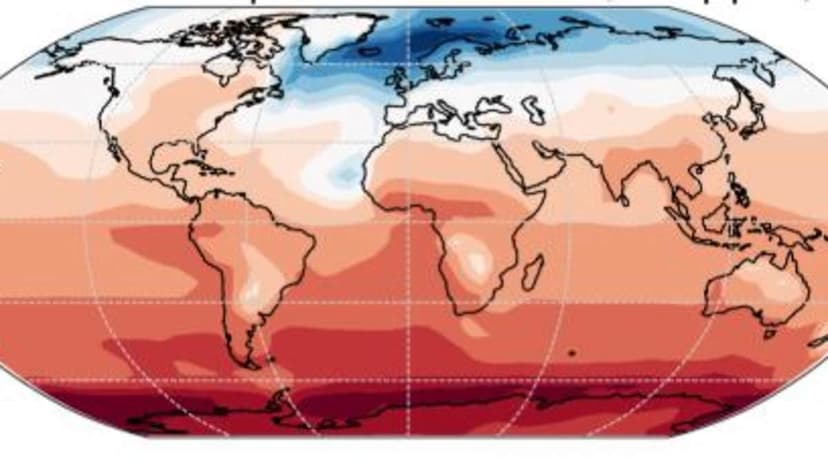
Scientists have simulated the potential consequences of a collapse in the Atlantic Meridional Overturning Circulation (AMOC), a crucial ocean current system that includes the Gulf Stream. Computer models indicate that such a collapse would release significant stores of carbon dioxide currently trapped beneath the ocean.
This release of CO2 is estimated to raise global temperatures by up to 0.27°C (0.5°F). While this warming might offset some cooling in Europe, the Northern Hemisphere could still experience falling temperatures, with the Antarctic potentially becoming 7°C (12.6°F) colder.
Conversely, the added carbon is predicted to cause extreme warming in the Southern Hemisphere, with temperatures in the Arctic potentially rising by 6°C (10.8°F). The AMOC, acting as a global conveyor belt for heat, is powered by the sinking of cold, salty water near Greenland.
Melting glaciers are introducing fresh water into the North Atlantic, making it less dense and slowing the AMOC. Previous studies warned of a tipping point for the AMOC. This new research highlights the unexpected feedback loop involving carbon release.
Researchers found that higher CO2 concentrations in the atmosphere when the AMOC fails exacerbate the impacts. At concentrations above 350 parts per million, the AMOC's collapse may become irreversible, leading to long-term shutdown without recovery.
