Home / Environment / Giant Iceberg Vanishes After 40 Years Adrift
Giant Iceberg Vanishes After 40 Years Adrift
31 Aug
Summary
- A23a, once the world's largest iceberg, has largely melted away.
- It drifted for nearly 40 years after breaking off Antarctica in 1986.
- Wildlife, including whales and penguins, inhabited the colossal ice formation.
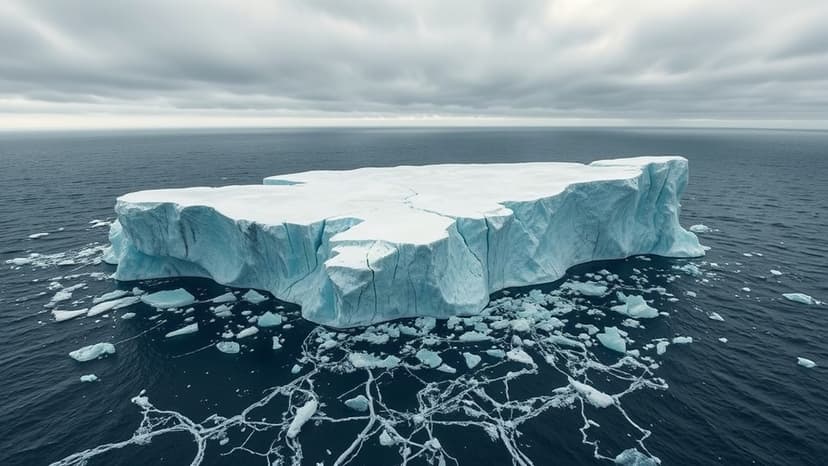
The A23a iceberg, which once held the title of the world's largest, has now largely melted away after a remarkable nearly four-decade journey. This colossal ice formation first broke from Antarctica's Filchner Ice Shelf in 1986. At its peak, A23a spanned approximately 2,000 square miles, a size rivaling Bali, and remained grounded for years.
Its movement began in 2020, and by November 2023, it was navigating the open Southern Ocean. Scientists closely monitored its progress, noting its unexpected path in March 2024 when it became caught in a powerful ocean current. After several months of rotation, it broke free and continued its voyage, entering warmer waters and losing mass.
By early 2025, tourists observed remnants of the Soviet research station Druzhnaya 1 on the iceberg. Later that year, A23a became stuck near South Georgia but eventually broke free again. Documentarians marveled at the abundant wildlife, including whales and penguins, that inhabited the moving ice island. By June 2025, its size had diminished significantly.
The US National Ice Center officially ceased tracking A23a in March 2026 due to its reduced size. Satellite images in subsequent months revealed it breaking into smaller pieces across the Southern Ocean. By May 2026, only faint remnants were detectable from space, marking the end of an era for this iconic iceberg.


