Home / Environment / Earth Shakes: Are We Entering a New Seismic Era?
Earth Shakes: Are We Entering a New Seismic Era?
17 Aug
Summary
- 2026 has seen an above-average number of major earthquakes globally.
- Earthquake deadliness depends more on location than magnitude.
- Most seismic activity occurs along the Pacific Ring of Fire.
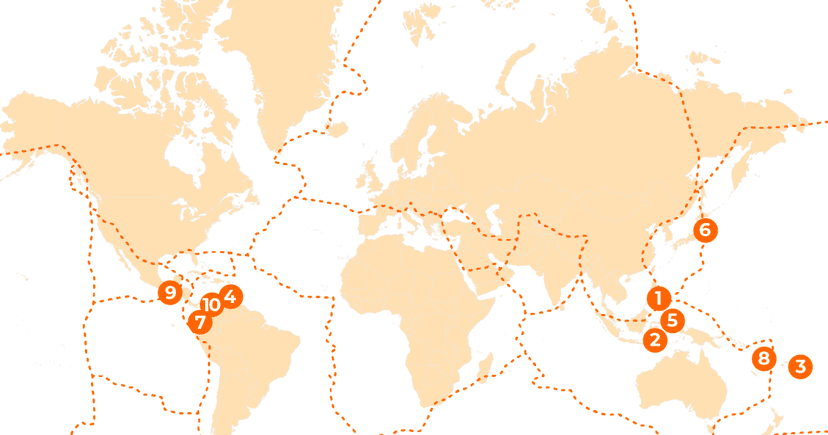
The year 2026 has witnessed a notable increase in significant seismic activity, with several earthquakes of magnitude 7 and above occurring in recent months across Indonesia, Colombia, and Mexico. This surge has prompted questions about whether the Earth is experiencing more frequent powerful quakes.
While the number of earthquakes of magnitude 6 or greater recorded by mid-August is slightly ahead of the 2016-2025 average, it falls within the historical norms. Experts highlight that the destructive potential of an earthquake is less about its magnitude and more about its location, depth, and the vulnerability of local infrastructure and buildings.
Seismic activity is primarily concentrated along the Pacific Ring of Fire, a vast zone responsible for about 90 percent of the world's earthquakes. Earthquakes occur when tectonic plates, the massive pieces of Earth's crust, shift and release built-up stress along faults. This process is constant but unpredictable, lacking any seasonal patterns.
Measurement of earthquake size uses the moment magnitude scale, where each whole number increase signifies a tenfold increase in ground shaking and a 32-fold increase in energy released. Magnitude 7 earthquakes are classified as major and can cause widespread damage, while magnitude 8 and above are considered great, leading to near-total destruction.


