Home / Education / China's AI Classrooms: Future Innovators Born?
China's AI Classrooms: Future Innovators Born?
16 Nov
Summary
- China aims for universal AI literacy among schoolchildren by 2030.
- The nation is conducting one of the world's largest AI-assisted learning experiments.
- Some schools use AI to plug teacher shortages, others focus on AI innovation.
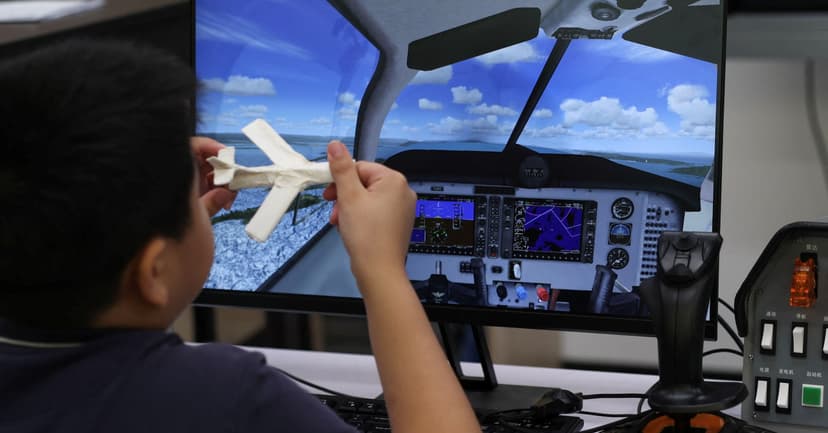
China is actively weaving artificial intelligence into its education system, aiming for universal AI literacy among schoolchildren by 2030. This initiative represents one of the world's most extensive AI-assisted learning experiments.
Beijing New Talent Academy in Beijing exemplifies this push, where students develop AI apps and engage with robotics. In contrast, schools in rural Anhui province leverage AI to overcome teacher shortages, providing personalized lessons generated by AI models.
This state-led transformation is a significant part of China's strategy to maintain technological leadership. Provincial plans mandate AI education, with some regions integrating AI literacy into high-stakes entrance exams by 2027.
However, the rollout is uneven, and concerns persist about AI reinforcing rote learning or leading to cognitive outsourcing. Measuring AI literacy remains a challenge, with mixed research findings on its impact on students' intellectual development.
Educators and parents are seeking balance, ensuring AI serves as a tool for deeper understanding rather than a shortcut. Safeguards are being explored to prevent over-reliance on AI, emphasizing its role as a support for learning, not a replacement for critical thinking.


