

Home / Education / NCERT Textbook Unveils India's Ancient Mathematical Genius
NCERT Textbook Unveils India's Ancient Mathematical Genius
23 Apr
Summary
- New Class 9 math textbook highlights ancient Indian contributions.
- It credits Brahmagupta for formalizing zero and negative numbers.
- Ancient Indian texts laid groundwork for calculus and geometry.
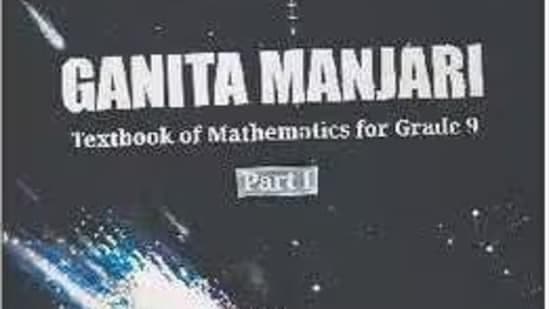
A newly released Class 9 mathematics textbook by NCERT extensively integrates ancient Indian mathematical contributions, titled Ganita Manjari Part 1. This 196-page book opens with a verse from Vedanga Jyotisha, described as one of the world's oldest astronomy texts. It credits ancient Indian scholars like Baudhayana for laying the foundation of coordinate geometry and Brahmagupta for formalizing zero and negative numbers as algebraic entities.
The textbook posits that the Sindhu-Sarasvati civilisation utilized grid-based thinking on an urban scale, a practice later developed by Baudhayana. It also highlights Ujjain's historical significance as a central longitude meridian. The work emphasizes that Brahmagupta's formalization of zero was crucial for understanding Cartesian planes, a concept absent in earlier textbooks.
Further, the book traces the philosophical concept of 'emptiness' (shunyata) in Upanishads and Buddhist literature to the mathematical concept of zero. It notes Aryabhatta's precise calculation of Pi and Brahmagupta's approximation that influenced Arab and European mathematics. Madhava's infinite series is recognized as birthing calculus, a significant shift from geometric methods.
This new textbook, aligned with NEP 2020, will be implemented from the 2026-27 academic session, replacing the 2006 edition. However, some experts have raised concerns, questioning the textbook's claims about Baudhayana's work on coordinate geometry and Brahmagupta's role in the development of negative numbers, suggesting earlier contributions from Chinese mathematicians.

