Home / Disasters and Accidents / Sumatra's Forests Fall: 1000 Dead, Now Government Fights Back
Sumatra's Forests Fall: 1000 Dead, Now Government Fights Back
19 Feb
Summary
- Over 1,000 died in Sumatra's floods and landslides last year.
- Deforestation from mining and plantations worsened the disaster.
- Government revokes permits, sues companies, but critics fear more harm.
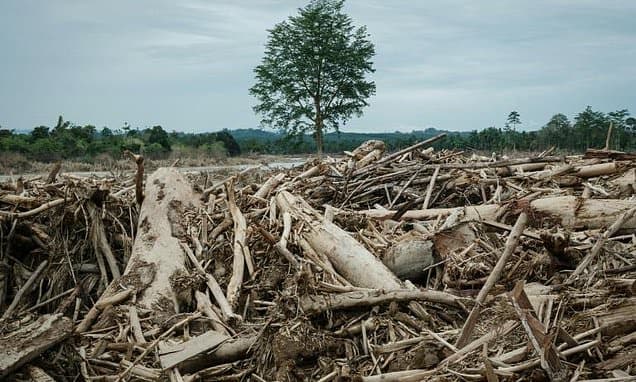
Last year, Sumatra experienced devastating floods and landslides that claimed over 1,000 lives. Officials have acknowledged that rampant deforestation, driven by mining and plantations, significantly worsened the disaster by removing natural rain absorption and soil stabilization.
In response, the Indonesian government has initiated stringent actions, including revoking permits for dozens of companies and planning to transfer management of approximately one million hectares of land to a state enterprise. President Prabowo Subianto emphasized a new priority on environmental protection.
However, environmentalists express concern that these measures may not adequately halt ongoing devastation, particularly in sensitive areas like Batang Toru, home to the critically endangered tapanuli orangutan. Conservationists fear continued operations could lead to an extinction-level event for the species, as nearly 60 orangutans may have been lost.
Critics argue that simply revoking permits is insufficient without comprehensive remediation plans and accountability. While lawsuits seek nearly $300 million for environmental recovery, experts believe significantly more funding is needed, and the state takeover does not guarantee improved environmental practices over production.
Despite the government's actions, there are no immediate signs that other large-scale deforestation projects will be halted. Environmentalists highlight the positive aspect of significantly increased public awareness regarding deforestation in Indonesia following the disaster, seeing it as a "blessing in disguise."