Home / Disasters and Accidents / Himalayan Glacier Collapse Triggers Deadly Nepal & Tibet Floods
Himalayan Glacier Collapse Triggers Deadly Nepal & Tibet Floods
31 Aug
Summary
- Flash floods and mudslides killed at least 800 people in Nepal and Tibet.
- A glacial collapse high in the Himalayas caused the catastrophic event.
- Nepal's minister called for global action on climate change impacts.
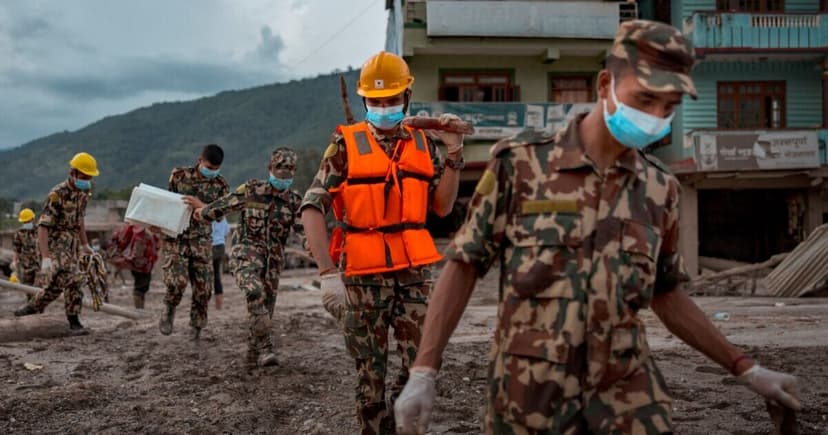
Tragic flash floods and mudslides, caused by a significant glacial collapse high in the Himalayas, have resulted in widespread devastation across Nepal and Tibet. As of Sunday, August 29, 2026, at least 800 people are confirmed dead, with over 3,000 reported missing following the events of Wednesday, August 26, 2026.
Residents in affected areas recount unimaginable loss. "Everything is finished. Nothing is left. Not even our home," shared Sharmila Tamang from Dhading, Nepal. Villages along the Bhotekoshi River have been inundated with thick sediment, burying homes, vehicles, and agricultural land. Many survivors are still without electricity as infrastructure lies tangled in the debris.
The disaster originated from a rockfall beneath a glacier, which registered as a magnitude 5.2 seismic event. This collapse sent a torrent of rock and melted water cascading down, swelling rivers and unleashing destructive forces through Tibet and Nepal. Scientists are investigating the link between this catastrophe and rising global temperatures, noting that the Himalayas are warming at an accelerated rate.
In response to the crisis, Nepal's Foreign Minister, Shisir Khanal, urged a unified global response to climate change, emphasizing that countries like Nepal are bearing a disproportionate burden of its effects. While direct links to global warming are still being studied, experts suggest an increase in such extreme events is plausible as global temperatures rise due to human activities.


