feedzop-word-mark-logo
searchLogin
Feedzop
homeFor YouIndiaIndia
You
bookmarksYour BookmarkshashtagYour Topics
Trending
Terms of UsePrivacy PolicyAboutJobsPartner With Us

© 2026 Advergame Technologies Pvt. Ltd. ("ATPL"). Gamezop ® & Quizzop ® are registered trademarks of ATPL.

Gamezop is a plug-and-play gaming platform that any app or website can integrate to bring casual gaming for its users. Gamezop also operates Quizzop, a quizzing platform, that digital products can add as a trivia section.

Over 5,000 products from more than 70 countries have integrated Gamezop and Quizzop. These include Amazon, Samsung Internet, Snap, Tata Play, AccuWeather, Paytm, Gulf News, and Branch.

Games and trivia increase user engagement significantly within all kinds of apps and websites, besides opening a new stream of advertising revenue. Gamezop and Quizzop take 30 minutes to integrate and can be used for free: both by the products integrating them and end users

Increase ad revenue and engagement on your app / website with games, quizzes, astrology, and cricket content. Visit: business.gamezop.com

Property Code: 5571

Home / Disasters and Accidents / Fukushima: Nature reclaims ghost towns

Fukushima: Nature reclaims ghost towns

27 Jan

Summary

  • Wild animals now roam Fukushima's abandoned streets.
  • Authorities struggle to encourage human return to Fukushima.
  • Contaminated soil storage sites may become nature reserves.
Fukushima: Nature reclaims ghost towns

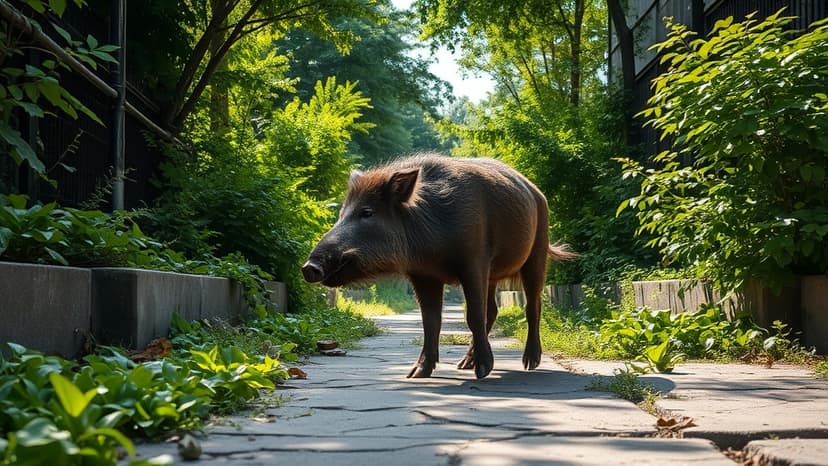
Fifteen years after the Fukushima Daiichi nuclear disaster, abandoned towns are being reclaimed by nature, with wildlife such as bears, raccoons, and boar now inhabiting the streets. Authorities face the dual challenge of encouraging former residents to return while also deciding how much land should be dedicated to the natural environment.

The nuclear plant, which suffered a triple meltdown in March 2011, led to widespread evacuation. Despite extensive decontamination efforts, elevated radiation levels persist in some areas, particularly in mountainous forests. These zones continue to pose challenges for human resettlement, with only 17% of the pre-disaster population having returned as of March 2025.

Experts are studying the impact of radiocaesium on the environment, noting that while animal populations have increased, certain food items remain banned. The long-term future of some contaminated sites, like interim storage facilities, is being considered for designation as nature conservation areas, pending national discussions.

Residents like Norio Kimura, who lost family in the disaster, hold onto dreams of returning, while others advocate for preserving sites like Kumamachi primary school as a reminder of the accident's dangers and lessons. The complex interplay between human return and nature's resurgence continues to shape Fukushima's future.

Disclaimer: This story has been auto-aggregated and auto-summarised by a computer program. This story has not been edited or created by the Feedzop team.
Bears, raccoons, and wild boar now roam freely in Fukushima's abandoned streets.
As of March 2025, only 17% of the pre-disaster population has returned to seven towns and villages in Fukushima prefecture.
Some contaminated soil storage sites are being considered for designation as nature conservation areas after the storage period ends.

Read more news on

Disasters and Accidentsside-arrow
•
trending

Padma Awards: Unsung heroes honoured

trending

Mumbai Metro Line 11

trending

Border 2 box office success

trending

Australian Open Heat Suspends Play

trending

MPESB Police Answer Key 2026

trending

Arne Slot on Mo Salah

trending

BBL 2026 Qualifier prediction

trending

Man wins £79,000 Range Rover

trending

Samsung Galaxy S26 Ultra

You may also like

Japan's Nuclear Giant Awakens After 15 Years

22 Dec, 2025 • 157 reads

article image

Radioactive Shrimp Scare: 85,000 Bags Recalled

18 Dec, 2025 • 154 reads

article image

Chernobyl's Shield Damaged by Drone, IAEA Warns

7 Dec, 2025 • 207 reads

article image

Not Radiation: Why Chernobyl Dogs Turned Blue

6 Dec, 2025 • 202 reads

article image

Chernobyl Fungus Eats Radiation, Offers Space Shield

2 Dec, 2025 • 230 reads

article image