Home / Disasters and Accidents / Radar to Replace 'See and Avoid' After Deadly DCA Crash
Radar to Replace 'See and Avoid' After Deadly DCA Crash
19 Mar
Summary
- FAA now requires radar for aircraft separation near airports.
- New rule replaces 'see and avoid' method after fatal crash.
- Over 15,000 near misses reported between 2021 and 2024.
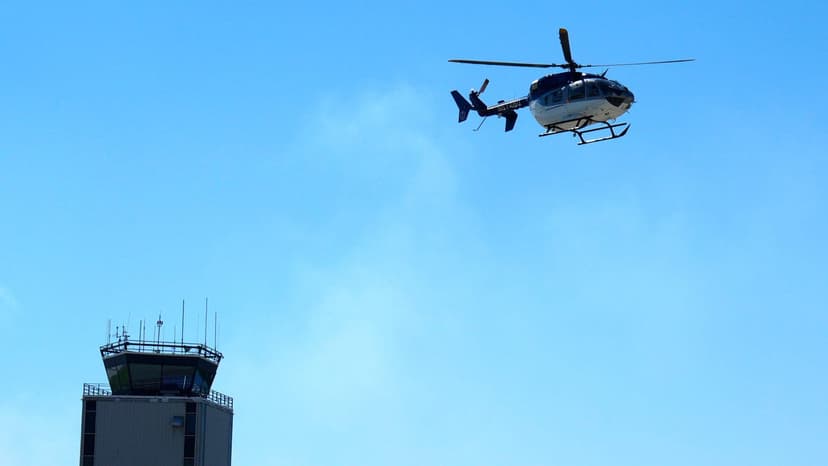
The Federal Aviation Administration (FAA) has announced a significant safety overhaul, mandating air traffic controllers to use radar for separating aircraft near major airport approach and departure paths. This new regulation moves away from the previous reliance on pilots' visual confirmation, termed 'see and avoid,' to maintain separation.
The impetus for this change was the tragic January 2025 mid-air collision of an Army Black Hawk helicopter and an American Airlines regional jet over the Potomac River, which resulted in 67 fatalities. The National Transportation Safety Board (NTSB) identified an "overreliance on visual separation" as a contributing factor, highlighting the limitations of the 'see-and-avoid' concept.
Transportation Secretary Sean Duffy noted that near misses between helicopters and fixed-wing aircraft have remained a persistent concern. Between 2021 and 2024, over 15,000 dangerous close encounters were reported. A recent incident on February 27, 2026, involved a police helicopter on a final approach path at San Antonio International Airport converging with an American Airlines flight, necessitating a sharp avoidance maneuver by the helicopter.
This proactive mitigation strategy by the FAA aims to enhance safety by ensuring consistent radar-based separation, offering controllers a more robust tool to manage air traffic, especially in busy airspace around airports.