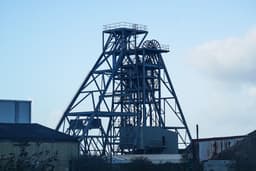
Home / Disasters and Accidents / Cornwall's Collapsing Mines: A Hidden Danger Unearthed
Cornwall's Collapsing Mines: A Hidden Danger Unearthed
20 Feb
Summary
- Heavy rains are causing ancient, unmapped mine shafts to collapse.
- Landowners bear the full cost of repairing dangerous mine workings.
- Many of Cornwall's 20,000 mine shafts remain unrecorded and uncapped.
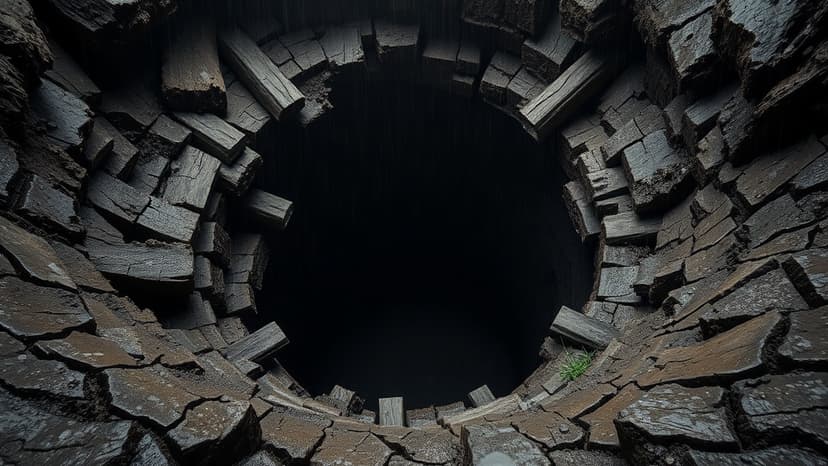
Beneath Cornwall's landscape lies an extensive, often unrecorded, network of historic mine shafts. Recent weeks of heavy rainfall have led to the collapse of several of these ancient workings, some extending hundreds of feet underground. This has resulted in incidents such as a golf course section collapsing and holes appearing in roads and open land.
Cornwall is estimated to have around 20,000 mine shafts, but only about a fifth are known to be safely capped. The remaining thousands pose potential risks to property and public safety, with significant financial implications. Unlike in former coal mining areas where a government-backed authority shares repair costs, landowners in Cornwall are solely responsible for the expenses.
Recent events include a 30ft shaft opening at Perranporth Golf Club and a collapse in Redruth trapping a car. Cornwall Council acknowledges an increase in reported ground voids and subsidence incidents, attributing them to changing weather patterns and ground conditions. The council states safety is a top priority and that they are actively monitoring the situation.
Experts point to water as the primary cause of these collapses, as it degrades the original timber supports that were designed to last about 150 years. The legacy of mines, such as Wheal Ramoth near Perranporth beach where three holes appeared in sand dunes, now rests with local parish councils for remediation, which can cost between £5,000 and £250,000.
Attempts have been made to implement a government-backed scheme similar to that for coal mining areas to help cover the costs of subsidence linked to past mining. However, the situation for tin mining areas in Cornwall remains unchanged. The Camborne School of Mines at the University of Exeter remains a hub for geological expertise.
Despite these challenges, mining continues to be a part of Cornwall's future. Plans are underway to reopen the South Crofty tin mine by 2028, and China clay mining persists. The region is also a significant source of lithium, crucial for battery production, with commercial output expected by 2029. For many residents, living above old mine workings is a familiar aspect of life in Cornwall.