
Home / Disasters and Accidents / Bangladesh Rice Harvest Threatened by Swollen Rivers
Bangladesh Rice Harvest Threatened by Swollen Rivers
29 Apr
Summary
- Pre-monsoon rains and upstream flows from India are causing floods in northeastern Bangladesh.
- Farmers are desperately trying to salvage partially submerged rice crops during harvest.
- Flooding impacts rural livelihoods, national food supply, and damages other crops.
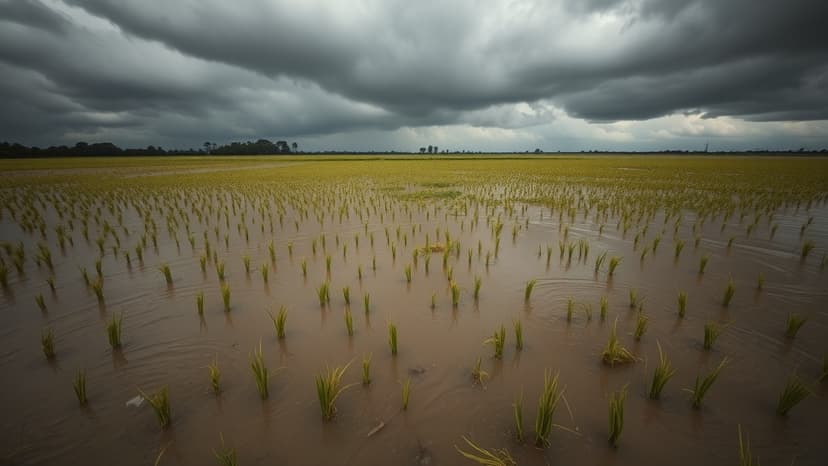
Northeastern Bangladesh is currently facing severe flooding due to heavy pre-monsoon rainfall and increased upstream river flows originating from India. Vast agricultural areas, particularly the vital haor wetland basin, are submerged, jeopardizing the ongoing summer rice harvest.
Farmers are urgently attempting to cut and save partially submerged Boro paddy, the country's major rice crop. Significant crop damage could have a detrimental effect on both the livelihoods of rural communities and the national food security. Beyond rice, other crops like vegetables have also been damaged, raising concerns about potential shortages.
Authorities have noted that continuous rainfall, combined with inflows from India's Meghalaya and Assam regions, has heightened the risk of sudden river flooding in vulnerable districts. Even brief submergence at this critical stage can drastically reduce rice yields. Farmers are also contending with irrigation issues exacerbated by diesel shortages linked to Middle East conflicts.
This situation is compounded by widespread waterlogging and disruptions in major cities, including Dhaka and Chittagong, affecting daily life and straining drainage systems. Bangladesh, recognized as highly vulnerable to climate change, experiences recurring flood risks, with millions exposed to annual river flooding, a phenomenon scientists predict will intensify.
