Home / Crime and Justice / Minister's Kids' Phones Stolen: Police Fail to Solve Case
Minister's Kids' Phones Stolen: Police Fail to Solve Case
20 Mar
Summary
- Police minister's children had phones stolen, not recovered.
- Offenders caught or convicted is unknown, minister admits.
- Stolen phones worth millions, trafficked internationally.

UK Police Minister Sarah Jones has disclosed that her children were victims of phone theft, with their devices never being recovered. She shared her personal experience on Sky News, admitting she lacks knowledge about whether the perpetrators were apprehended or convicted. Jones emphasized the need for improved police communication processes, stating that while the initial police response was good, the follow-up and victim updates were lacking.
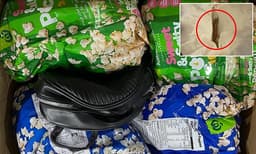
This personal account sheds light on the broader issue of phone snatching in the UK. Last year, over 71,000 phones were reported stolen in London alone. The international trade in stolen devices is substantial, with phones stolen in the UK fetching high prices in countries like China due to fewer government restrictions. Reports indicate that children as young as 14 are being recruited via social media to steal phones for gangs, with significant financial incentives offered.
The Metropolitan Police reported 71,391 phone thefts in London last year, a decrease from the previous year. In a recent month-long operation, 248 arrests were made, and approximately 770 stolen handsets were recovered. The force is employing tactics like e-bikes and drones to combat this crime. However, the Met remains an outlier in England and Wales for the low proportion of personal robberies and thefts from the person that are solved, with suspect identification rates as low as 6.9% for robberies and 0.9% for thefts from the person.
In specific London boroughs like Westminster, a significant majority of thefts from the person and personal robberies involve mobile phones. The international trade in stolen phones is reportedly worth millions, with devices finding their way to markets in Algeria, China, and Hong Kong, where demand is high and government controls are less stringent.