feedzop-word-mark-logo
searchLogin
Feedzop
homeFor YouIndiaIndia
You
bookmarksYour BookmarkshashtagYour Topics
Trending
Terms of UsePrivacy PolicyAboutJobsPartner With Us

© 2026 Advergame Technologies Pvt. Ltd. ("ATPL"). Gamezop ® & Quizzop ® are registered trademarks of ATPL.

Gamezop is a plug-and-play gaming platform that any app or website can integrate to bring casual gaming for its users. Gamezop also operates Quizzop, a quizzing platform, that digital products can add as a trivia section.

Over 5,000 products from more than 70 countries have integrated Gamezop and Quizzop. These include Amazon, Samsung Internet, Snap, Tata Play, AccuWeather, Paytm, Gulf News, and Branch.

Games and trivia increase user engagement significantly within all kinds of apps and websites, besides opening a new stream of advertising revenue. Gamezop and Quizzop take 30 minutes to integrate and can be used for free: both by the products integrating them and end users

Increase ad revenue and engagement on your app / website with games, quizzes, astrology, and cricket content. Visit: business.gamezop.com

Property Code: 5571

Home / Crime and Justice / Supreme Court Eyes Cellphone Data Privacy

Supreme Court Eyes Cellphone Data Privacy

17 Jan

•

Summary

  • Justices will review constitutionality of geofence warrants for cellphone data.
  • Warrants collect location data from millions, including innocent individuals.
  • Lower courts are divided on whether these warrants violate the 4th Amendment.
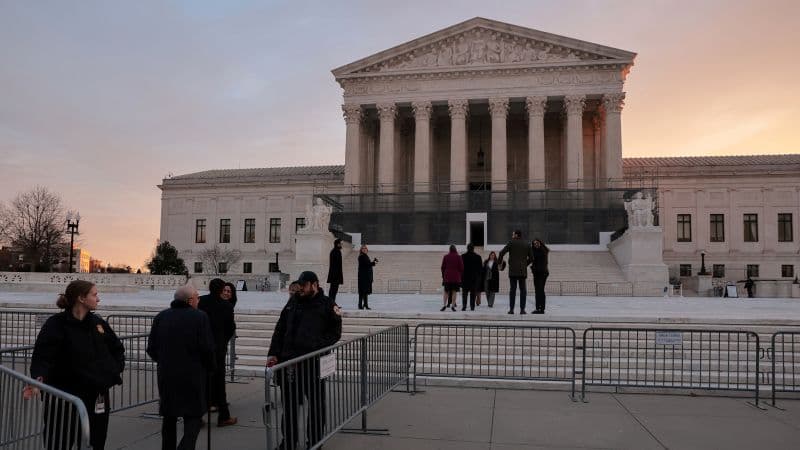
Supreme Court Eyes Cellphone Data Privacy

The Supreme Court has agreed to review whether police geofence warrants, which access vast amounts of cellphone location data to identify individuals near crime scenes, are constitutional. This practice has created a split among lower courts, with some ruling it violates the Fourth Amendment's protections against unreasonable searches.

The case involves a man convicted of bank robbery, who was identified after police used a geofence warrant on Google to obtain location data for devices near the bank. Critics argue that these warrants sweep up data from millions of people not involved in any criminal activity, raising significant privacy concerns.

While the federal government contends that users opt into location services and that warrants don't constitute a search, Google's recent policy changes have made compliance with such warrants more difficult. The outcome of this review will have significant implications for digital privacy and law enforcement practices.


trending

Vodafone Idea turnaround plan

trending

Dixon Tech share price rises

trending

South Indian Bank shares tank

trending

Gold, silver prices jump

trending

Sabalenka, Rybakina Australian Open Final

trending

RCB wins WPL match

trending

Realme P4 Power launched

trending

Swiggy share price declines

trending

Quartararo leaving Yamaha for Honda

Disclaimer: This story has been auto-aggregated and auto-summarised by a computer program. This story has not been edited or created by the Feedzop team.
A geofence warrant allows law enforcement to search for cellphone location data within a specific geographic area and time frame.
The Supreme Court is examining whether these warrants violate the Fourth Amendment's privacy protections by collecting data from many people.
Geofence warrants can collect location data from millions of individuals not suspected of any crime, raising privacy concerns.

Read more news on

Crime and Justiceside-arrowGoogleside-arrow

You may also like

France Ditches US Tech for Sovereign Visio Platform

11 hours ago • 4 reads

article image

Tax Shock: Mergers Trigger Taxes Without Selling

12 Jan • 106 reads

article image

App Stores: The New Gatekeepers for Online Access?

11 Jan • 92 reads

article image

Zero Tolerance for Violence: China's Top Court Protects Minors

6 Jan • 108 reads

article image

Louisiana Age Law Blocked: Judge Cites Privacy Risks

16 Dec, 2025 • 248 reads

article image