Home / Crime and Justice / Supreme Court Eyes Cellphone Data Privacy
Supreme Court Eyes Cellphone Data Privacy
17 Jan
Summary
- Justices will review constitutionality of geofence warrants for cellphone data.
- Warrants collect location data from millions, including innocent individuals.
- Lower courts are divided on whether these warrants violate the 4th Amendment.
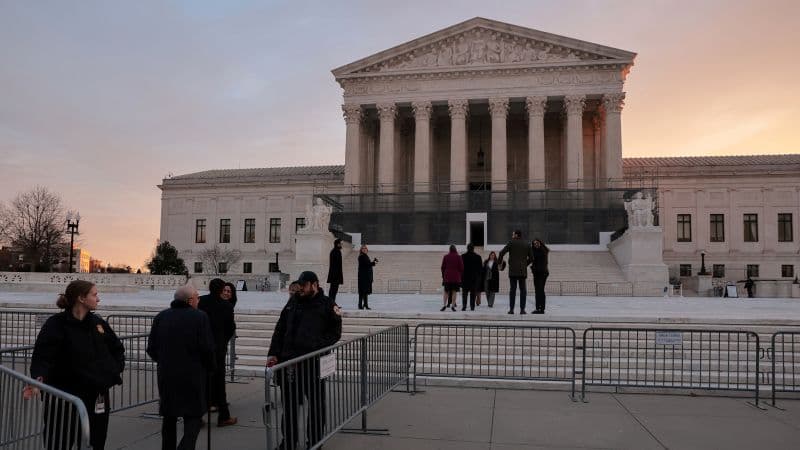
The Supreme Court has agreed to review whether police geofence warrants, which access vast amounts of cellphone location data to identify individuals near crime scenes, are constitutional. This practice has created a split among lower courts, with some ruling it violates the Fourth Amendment's protections against unreasonable searches.
The case involves a man convicted of bank robbery, who was identified after police used a geofence warrant on Google to obtain location data for devices near the bank. Critics argue that these warrants sweep up data from millions of people not involved in any criminal activity, raising significant privacy concerns.
While the federal government contends that users opt into location services and that warrants don't constitute a search, Google's recent policy changes have made compliance with such warrants more difficult. The outcome of this review will have significant implications for digital privacy and law enforcement practices.