Home / Crime and Justice / Singapore Fights Back Against Scammers
Singapore Fights Back Against Scammers
13 Mar
Summary
- Singaporean investor lost US$120,000 in crypto scam.
- Scam cases and losses decreased last year for the first time.
- Tough new laws compel tech giants to tackle online fraud.
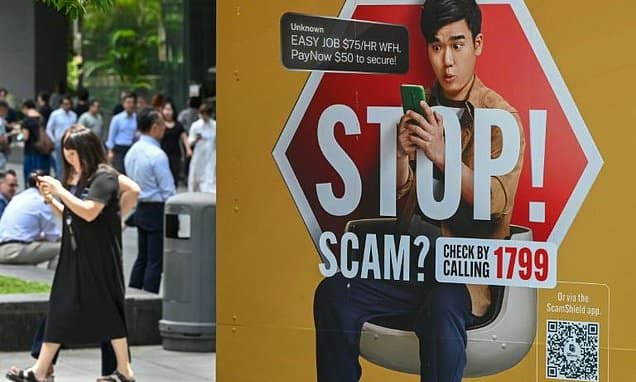
Singaporean investor Mark Koh experienced profound shame after losing an estimated US$120,000 to a cryptocurrency scam, highlighting the city-state's vulnerability to fraud. High incomes and hyperconnectivity make Singapore a prime target, with scams costing the nation approximately US$1.6 billion for 2024 and 2025. This included a recent incident where even former prime minister Lee Hsien Loong was duped by a fake e-commerce site.
However, Singapore is actively combating scams, as evidenced by a 28 percent drop in cases to 37,308 and reduced losses last year. This decline is attributed to anti-scam strategies and public education. The government has introduced tougher punishments, including caning, and a 24-hour helpline. The Online Criminal Harms Act of 2023 empowers authorities to compel tech platforms like Telegram to remove scam content, with significant success reported.
Criminals are evolving, increasingly using artificial intelligence for impersonation scams, which saw a 1,400 percent surge globally in 2025. Perpetrators often operate transnationally, exploiting digital vulnerabilities. Social media platforms like Facebook (52%), TikTok (26%), and Instagram (14%) are common channels for reaching victims. Tech giants like Meta, Apple, and Google are now mandated to enhance safeguards and block fraudulent content, with Meta reporting the removal of over 134 million scam ads in 2025.