

Home / Crime and Justice / Death Investigator Recounts Grisly Carnegie Deli Massacre
Death Investigator Recounts Grisly Carnegie Deli Massacre
15 Apr
Summary
- Investigator recalled the distinct smells of blood, marijuana, and wine.
- Three friends were fatally shot in their Manhattan apartment on May 10, 2001.
- Forensic evidence contradicted a killer's claim of an accidental shooting.
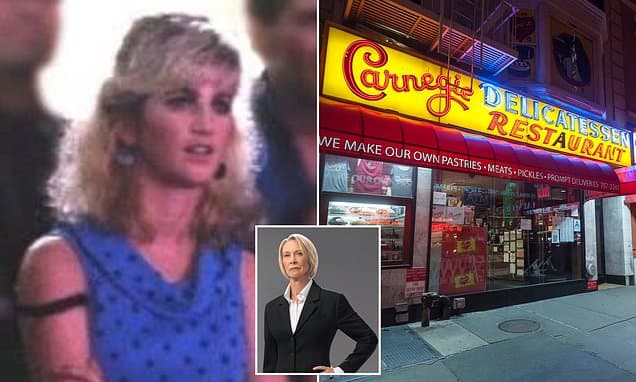
Death investigator Barbara Butcher vividly remembers the immediate sensory assault upon entering a Manhattan loft apartment on May 10, 2001. The air was thick with the mingled scents of marijuana, blood, and red wine, a stark prelude to the violence that had unfolded. Five friends had been shot; three, Charles Helliwell III, Stephen King, and Jennifer Stahl, died in the attack.
Butcher, then with the NYC Medical Examiner's Office, was tasked with reconstructing the events, a process she terms understanding the 'choreography of murder.' Her role involved meticulously analyzing the crime scene, blood spatter, body positions, and forensic evidence. This scientific approach allowed her to determine the 'manner of death,' going beyond the medical examiner's 'cause of death.'
The investigation into the so-called Carnegie Deli Massacre highlighted how a victim's life often informs their death. Jennifer Stahl, an actor known for a small role in 'Dirty Dancing,' was found in her recording studio, having turned to selling marijuana. Evidence suggested the killers, Sean Salley and Andre Smith, had ransacked the apartment, indicating a robbery gone wrong.
Forensic details, such as gunshot residue and stippling, were critical. Salley claimed he accidentally shot Stahl due to a shaky hand, but Butcher's analysis of the wound and stippling proved he held the gun steadily against her forehead. This crucial finding contradicted Salley's testimony and helped secure convictions for him and Smith, who were found guilty of three counts of murder.
Butcher's extensive experience, including over 5,500 death scene investigations and her work at Ground Zero after 9/11, has shaped her perspective. She emphasizes the importance of thorough documentation and observation at crime scenes, not only for prosecution but also to understand the broader human story. Her work has left her with a profound appreciation for life's moments of joy, alongside a heightened awareness of potential dangers.
