Home / Business and Economy / VW CEO: "More Than Critical" Situation Amidst Crisis
VW CEO: "More Than Critical" Situation Amidst Crisis
25 Aug
Summary
- Volkswagen CEO calls the company's situation "more than critical".
- High costs and strong Chinese competition challenge VW.
- VW is cutting capacity, employment, and changing its EV strategy.
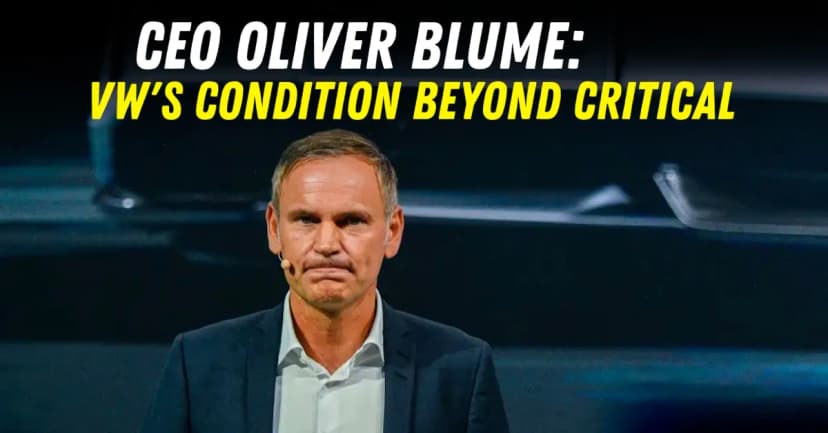
Volkswagen CEO Oliver Blume has characterized the company's current standing as "more than critical," highlighting a crucial period of cost-cutting, profitability enhancement, and response to escalating Chinese competition. The automotive giant is grappling with the immense investment required for electric vehicles and software development, alongside continued production of combustion-engine vehicles.
To address these challenges, Volkswagen is reducing capacity and employment within Germany, revising its electric vehicle strategy, and increasingly leaning on partnerships. The high cost of operating German manufacturing facilities, compared to leaner competitors, is a major concern. This situation is further complicated by Volkswagen's significant role as a German employer, involving political and social considerations.
China, once a cornerstone of Volkswagen's growth, now presents a tougher market with strong local competitors like BYD dominating EVs and plug-in hybrids, offering advanced software features. Volkswagen is consequently developing China-specific technology and partnering with local firms like XPeng to accelerate development and access competitive electronic and software architectures.
The expensive transition to electric vehicles has been marked by developmental hurdles, including slow software progress and critical customer feedback on interior design. While restructuring its software operations, Volkswagen must simultaneously support existing combustion-engine and hybrid vehicle lines due to varying global EV adoption rates. This dual-support strategy provides an advantage to newer, EV-focused manufacturers.
Future success hinges on making smaller electric cars, like the anticipated ID. Polo, profitable by reducing manufacturing and development costs. Volkswagen is increasing the use of common platforms and components across its brands to achieve this, while ensuring distinct brand identities. This cost-sharing strategy is evident in its India operations, where localized architectures for multiple vehicles spread development and manufacturing expenses.
Blume's assessment underscores the urgent need for substantial changes to Volkswagen's cost structure and development model. While the company possesses global brands, manufacturing scale, and engineering expertise, its high fixed costs contrast with the agility and rapid development cycles of Chinese competitors. Volkswagen must therefore accelerate product development and reduce costs without compromising its engineering quality and brand strength.


