

Home / Business and Economy / Uruguay Central Banker: Emerging Markets Are Stable
Uruguay Central Banker: Emerging Markets Are Stable
25 Apr
Summary
- Emerging economies are resilient despite global turmoil.
- Central banks' credibility built since the pandemic is key.
- Uruguay now enjoys counter-cyclical monetary policy options.
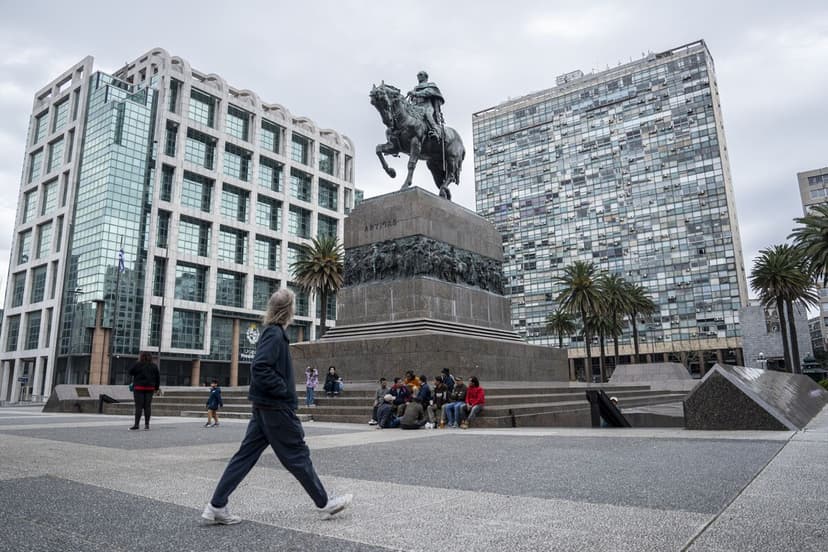
Guillermo Tolosa, who previously mapped global economic risks at the IMF, finds Uruguay's economic reality far more positive than anticipated. Despite international energy crises, Latin American and other emerging markets are demonstrating remarkable resilience. This robustness stems from the hard-won credibility of monetary policymakers in maintaining price stability, notably their proactive rate hikes during the pandemic that shielded the region from severe debt crises.
This newfound stability allows countries like Uruguay the luxury of implementing counter-cyclical monetary policy, a first for the nation. Tolosa noted that Uruguay's inflation is below 3%, the slowest since 1956, and despite a recent pause in rate cuts due to global inflationary pressures, the central bank can now act to stabilize the economy, akin to advanced-country central bankers.
Tolosa emphasized that emerging markets' currency stability is not solely due to internal efforts but also because advanced economies present growing risks, such as unsustainable fiscal deficits. He is focused on building the central bank's public trust by framing monetary policymakers as 'expectations engineers' and 'narrative entrepreneurs.' This effort is supported by President Yamandu Orsi's administration, which prioritizes low inflation alongside growth. Regional cooperation with countries like Chile and Brazil further bolsters this positive outlook, attracting foreign investment.
Recent IMF projections show South America averaging over 2.5% economic growth annually from 2027 to 2031, a significant improvement from past volatility. Tolosa concludes that the current environment presents an unprecedented opportunity for central bankers in Latin America.
