Home / Business and Economy / UPI Charges Boost India's Digital Rupee Push
UPI Charges Boost India's Digital Rupee Push
16 Sep
Summary
- UPI P2M transactions over ₹2,000 to incur MDR from Sep 2026.
- Digital rupee adoption may rise as merchants avoid UPI charges.
- CBDC pilots expanding to subsidies, healthcare, and education.
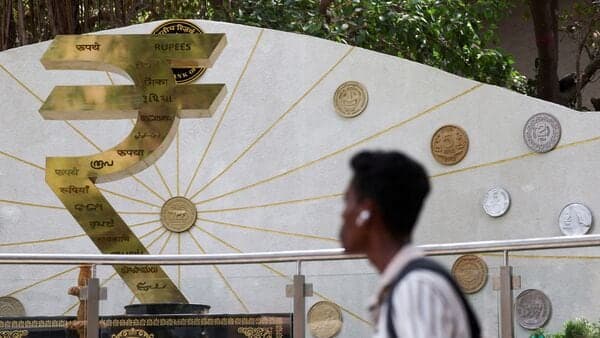
The recent implementation of Merchant Discount Rate (MDR) on unified payments interface (UPI) person-to-merchant (P2M) transactions is anticipated to significantly bolster the adoption of India's central bank digital currency (CBDC), also known as the digital rupee or e-rupee. Introduced on Tuesday evening, the MDR applies to transactions exceeding ₹2,000, with a cap of ₹300, potentially driving merchants and users towards the currently free CBDC wallets to circumvent these new charges.
This strategic shift aims not only to encourage retail use cases for the digital rupee, particularly for subsidy transfers, but also to alleviate the strain on the overloaded UPI network. While CBDC adoption has been modest due to UPI's widespread use and user-friendliness, the introduction of fees could present a compelling alternative. The government is actively developing new use cases for CBDC, focusing on direct benefit transfers for subsidies, healthcare payouts, and educational expenses, with pilots expected to roll out soon.
As of March 31, 2026, the value of bank notes in circulation for the retail CBDC (CBDC-R) stood at ₹771.66 crore. Although CBDC transactions are interoperable with UPI through shared infrastructure and QR codes, their backend processing remains distinct. The programmability feature of CBDC is also being leveraged for tracking subsidy end-use, enhancing transparency and reducing leakage. The ongoing pilots in Gujarat, Puducherry, and Chandigarh for public distribution system (PDS) beneficiaries underscore the commitment to integrating CBDC into essential services.


