

Home / Business and Economy / Great Britain's Housing Gap Hits Historic High
Great Britain's Housing Gap Hits Historic High
18 Mar
Summary
- The gap between starter homes and larger properties reached a record 52%.
- London and South East buyers face the steepest challenges trading up.
- Yorkshire and the Humber offer the most achievable property ladder.
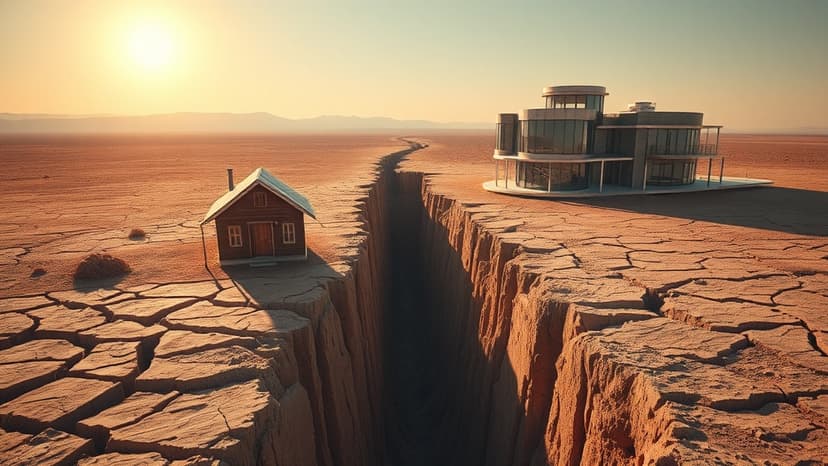
The disparity in asking prices between smaller, first-time buyer homes and larger properties across Great Britain has widened to its highest point on record. In March, the average price for a two-bedroom or smaller home was £226,955, while a typical three- or four-bedroom "second-stepper home" averaged £345,857. This 52% gap, the largest since 2001, highlights growing challenges for homeowners aiming to upgrade.
Buyers in the South East and London experience the most significant price gaps, at 61% and 60% respectively. Conversely, Yorkshire and the Humber offer the most accessible market for trading up, with a 38% price difference, followed closely by Wales at 40%. Property experts note that building the necessary equity for such a move remains a substantial barrier for many households.
Recent trends indicate that flats have seen slower price growth compared to houses, a shift intensified by the pandemic-driven "race for space." Concerns regarding leaseholds, ground rents, cladding, and high service charges have also impacted flat prices. By December 2025, UK flats were 16% cheaper than terraced properties and 56% cheaper than detached properties, marking significant historical differences.
The escalating mortgage rates, influenced by global economic factors, are expected to further exacerbate the difficulty of moving between smaller and larger homes. This widening price gap poses a considerable challenge for prospective movers seeking more space or different property types.