Home / Business and Economy / Toyota Goes All-In on EVs While Rivals Scale Back
Toyota Goes All-In on EVs While Rivals Scale Back
24 Mar
Summary
- Toyota plans seven battery-powered models by 2027.
- The company cites customer demand for its EV expansion.
- Rivals like Honda and Lamborghini are cutting EV plans.
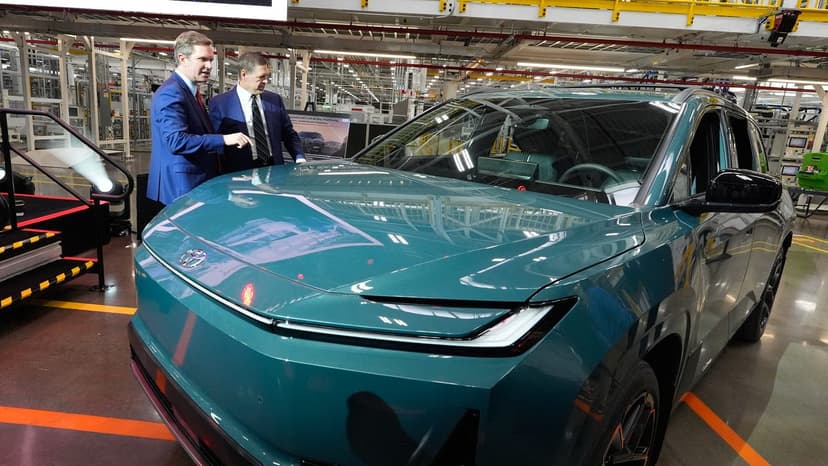
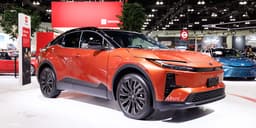
In a market where many automotive manufacturers are reducing their electric vehicle (EV) commitments, Toyota is notably accelerating its EV strategy. The company announced plans to introduce three new electric models, aiming to have a total of seven battery-powered vehicles available from its main brand and Lexus luxury subsidiary by 2027. This expansion includes a future electric Highlander SUV. Toyota states its approach is a direct response to customer demand and is part of a broader 'multi-path' strategy that encompasses gasoline engines, hybrids, plug-in hybrids, and fuel cell vehicles. This strategy emphasizes offering what customers want and preparing for future consumer preferences. Toyota's senior management highlights consistency in their plans, contrasting it with competitors who they perceive as reacting to market swings. Environmental groups, which have previously criticized Toyota for its slower adoption of EVs, view this expansion as a potential shift, though some advocate for the company to also cease lobbying against stricter climate policies. Meanwhile, other automakers are making different choices: Ford is transitioning its F-150 Lightning to an Extended Range Electric Vehicle (EREV), Honda has canceled plans for three electric SUV and sedan models, and Lamborghini and Rolls-Royce have abandoned their fully electric car development goals for the decade. Tesla, according to CEO Elon Musk, is also winding down production of its Model S and Model X EVs in favor of robotics.
As of March 24, 2026, Toyota's expanded EV offering positions it to compete with manufacturers like Mercedes-Benz, which is projected to offer six EVs. This move contrasts sharply with Toyota's past perception as an EV laggard. The company's general manager of environmental regulation and research, Julia Rege, emphasized that the company is evolving its product lineup based on customer needs. Rick Gezelle, senior program manager of sustainability, noted that Toyota is maintaining its course rather than pivoting, highlighting the value of consistency in long-term planning. Public Citizen's Climate Program campaigner, Adam Zuckerman, noted in May 2025 that Toyota's EV announcements offered an opportunity to transition from an "EV laggard to EV leader" but stressed the importance of backing such announcements with action against climate-denying influences.