Home / Business and Economy / Texas Bets Big on Nuclear Power's Future
Texas Bets Big on Nuclear Power's Future
17 Feb
Summary
- Texas is a key testing ground for small modular nuclear reactors.
- State and federal funding support the development of new nuclear projects.
- SMRs aim to provide reliable power amidst growing energy demand.
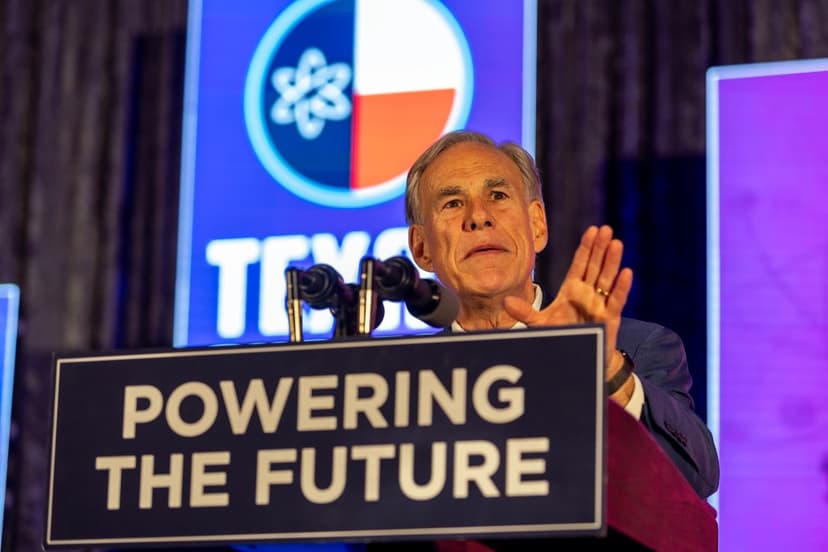
Texas is accelerating its pursuit of nuclear energy, focusing on small modular reactors (SMRs) as a solution for its expanding power needs. The state's initiative, spurred by Governor Greg Abbott's directive, has transitioned into legislation, establishing a $350 million Texas Nuclear Development Fund. This push aims to make Texas a hub for advanced nuclear technology.
By 2050, Texas anticipates its energy demand could nearly triple, driven by data centers, electric vehicles, and industrial electrification. SMRs, designed for factory production and on-site assembly, are seen as a way to provide reliable, low-emission electricity to supplement intermittent sources like wind and solar.
Several projects are progressing, each employing different technologies. Natura Resources is developing a liquid-fuel reactor in Abilene, while Aalo Atomics is designing a factory-producible sodium-cooled fast reactor in Austin. These initiatives face challenges, including high construction costs and the need for long-term power purchase agreements.
Despite global examples like Russia's floating plant and China's grid-connected reactor, no SMR has yet reached commercial operation in the United States. Companies like NuScale Power have faced cost overruns and difficulties securing commitments. Texas's commitment, supported by $1.2 billion from the Department of Energy, aims to overcome these hurdles.