

Home / Business and Economy / Energy Crisis Fuels Solar Boom in South Korea
Energy Crisis Fuels Solar Boom in South Korea
16 Apr
Summary
- Solar income funds communal meals and village services.
- South Korea aims for 2,500 solar income villages by 2030.
- Grid capacity limits and Chinese supply chains challenge solar growth.
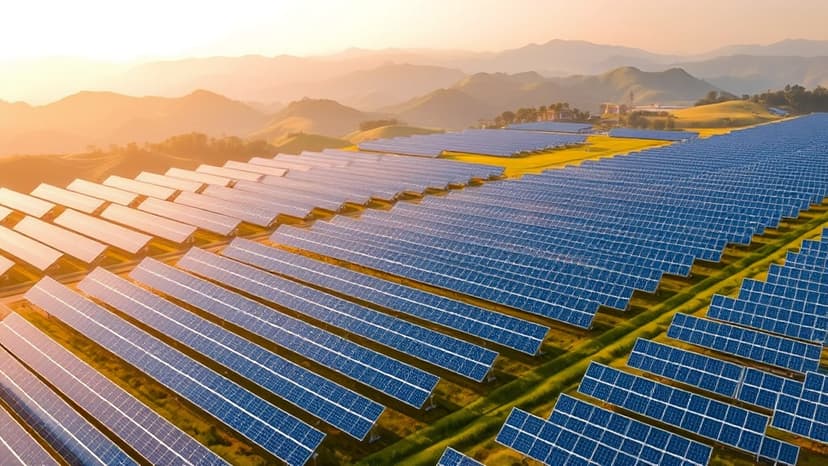
The ongoing energy crisis has injected political urgency and increased funding into South Korea's solar industry transformation. Guyang-ri, a village of 70 households, exemplifies this shift, generating substantial monthly profit from its one-megawatt solar installation. This revenue now funds communal lunches, transportation for the elderly, and cultural activities, fostering stronger community bonds.
The "solar income village" program, with Guyang-ri as a national prototype, aims to expand to 2,500 villages by 2030, with a significant acceleration in new village creation this year. President Lee Jae Myung is leveraging the Middle East crisis to expedite clean energy transition, emphasizing that fossil fuel dependency poses a national vulnerability.
While renewable energy targets and funding have increased significantly, the program faces obstacles. South Korea's electricity grid is nearing capacity, particularly in solar and wind-rich regions, leading to project delays and wasted renewable capacity. The nation's heavy reliance on Chinese solar panel supply chains also presents a challenge.
Despite these hurdles, the government is implementing measures like domestic module requirements and carbon footprint certification for imports. However, concerns remain about the pace of transition, especially as substantial funds are still allocated to subsidizing fossil fuel price hikes. The future of South Korea's energy landscape hinges on institutional courage to fully embrace transformative change.
